

“Capriccio”
Capriccio in art, and in landscape painting, began as an architectural fantasy—placing its familiar subject within unfamiliar, fictional or fantastical settings. Most often, and more popularly, artists would render a recognisable building in ruins; a split between past, present, futures, real, unreal, the fatal and the eternal. By now, capriccio has left its beginnings to lend its name to artworks with an air of whimsy and imagination. If it were up to us, capriccio would be synonymous with transformation and artistic liberty. For Opus #5, we asked contributors to go ahead and juxtapose, imagine, change, rewrite and rearrange the cosmos. To let their fantasies unwind!
- Code Orange – Video by Sibtain Hyder
- Art Where Archive Ends: Ali Akbar’s Homage to Hidden Histories – Essay by Pritha Mahanti
- Gong Gangmei: Blending Cultures and Futures in Videography – Interview by Jessica Jakoinao
- Paganini’s Capriccio – Art and Text by Devadeep Gupta
- Faraway Fantasies: Lucky Ali’s Indie Pop Odyssey – Essay by Shreya Bhowmik
- Uncle Frank Makes a Movie – Essay by Jessica Jakoinao
- Celestina and Lawrence: An Indie film transforms Jharkhand’s cinematic landscape – Essay by Pritha Mahanti
- Tell It to the Wall – Art by Sarmistha Banerjee
- Prologue: Impulse – Music by Soham Mallick

“The Visual World of Indian Cinema”
Indian cinema is a world of visual excess, be it the larger than life mainstream or the stark realism of arthouse and experimental. From extravagant sets and elaborately choreographed dance sequences to rich landscapes and an enviable store of art and architecture, the Indian cinematic experience is nothing short of intense. Think Anarkali’s grand and glamorous display of rebellion in Mughal-e-Azam or the spectacularly nauseating depiction of a depraved humanity in the hunt scene from Jallikattu—this is a universe of veritable sensory engagement. For Opus #4, we sought submissions, both reflective and experimental, that engage with the wonders of motion pictures, be it Bollywood or the rich tapestry of regional language cinema.
- Deco Dreams: Art, Aspiration and Angst in Middle Cinema – Essay by Sumaiya Mustafa
- Frames of Absence – Video and Text by Pritha Mahanti
- The Aftershock – Fiction by Madhusre Das
- Of Desires and Designs – Art by Sarmistha Banerjee
- Two’s too much: The duo and its discontents – Essay by Anuja Dutta
- How spacious is ‘The Booth’? – Essay by Shreya Bhowmik
- 3 HAIKU – Poems by Kamil Plich
Ptenopus Special

“Painting Desires”
Gustav Klimt painted his rumoured lover, Adele Bloch-Bouer, a Viennese high society socialite as the subject of his famous painting – Judith and the Head of Holofernes (also known as Judith I) in 1907. The painting, depicting her in denuded sensuality holding the beheaded Holofernes sent shockwaves through Viennese society. Judith, set against an opulent golden background, with her voluptuous expressions, unabashedly channelling the ‘enchantress’ and the ‘avenger’ revels in murderous pleasure. The work speaks of desire unchained. In the history of art, the objects of desire abound. Desires reveal; desires betray; desires express; desires declare. Desires are multifarious and infinite, be it of grandeur, romance, power, preservation or of ruination. For Opus #3, we sought submissions on or inspired by paintings of desire. Enjoy!
- beings of Light and Sound: Screening Q&A – Jessica Jakoinao in conversation with the Cast and Crew
- Adieu to the White Building: Cambodia’s House of Desires – Essay by Shreya Bhowmik
- The Last Day – Artwork by Mayank Kaushik
- Rediscovering Makeup with Teshang Tongtang – Feature piece by Pritha Mahanti and Jessica Jakoinao
- The Kiss – Short Story by Madhusre Das
- Home Again – Feature piece by Pritha Mahanti
- Birth of the Universe – Poetry by Abhimanyu Singh Baghel
- “Aunty how much is this for?” – Artwork by Sudeshna Bhattacharya
- The Harp and the Novice – Poetry by Soham Mallick
- “Amar Klimt” : A Landscape of Desire – Feature piece by Ptenopus

“Homo Bulla”
Man is like a bubble. Its life fragile and brief. (Soap) bubbles floating about the canvases of 17th century Dutch vanitas paintings harped upon the brevity of life, the suddenness of death and therefore the futility of pleasure. The vain be warned. Beauty is transient. Death inevitable! But interpretations have varied. It has found beauty in ephemerality. How does one see these bubbles? As idealisms, empty promises and self-delusion in satirical prints? As an allegory for the vice of vanity in the manner of Thomas Couture’s Soap Bubbles or as Jean Siméon Chardin’s ode to childhood, idleness, and the simple pleasures of life (bubble gums and bubble wraps) ? As an elegant reminder of the fleeting nature of time? The impermanence of youth? How would Harrison Odjegba Okene, the accidental aquanaut, see it? For our Opus #2 we sought bubble bedecked submissions on or inspired by artworks alluding to the themes above.
- Fresh Wounds – Poetry by Sochuiwon Priscilla Khapai
- “Such a Lovely Face” – Essay by Anuja Dutta
- The Great Bloat – Poetry by Sarbani Mohapatra
- Homo Bulla: Touching Impermanence – Artwork by Priya Anupama Kujur
- Matter and Mindscape: Artist Hege Liseth on her animation video “Homo Bulla” – Interview by Pritha Mahanti
Ptenopus Special
- Nothing is Outside the Bubble: A Rendezvous – by Pritha Mahanti
- Breakfast Musings: Life in Stills – by Jessica Jakoinao
- Welcome to the Garden of Earthly Delights! – Swapnil Singh
- The Big Bubble Theory – Pritha Mahanti
- Sokolsky’s Sassy Girls Zorbing to Hyuna’s Beat
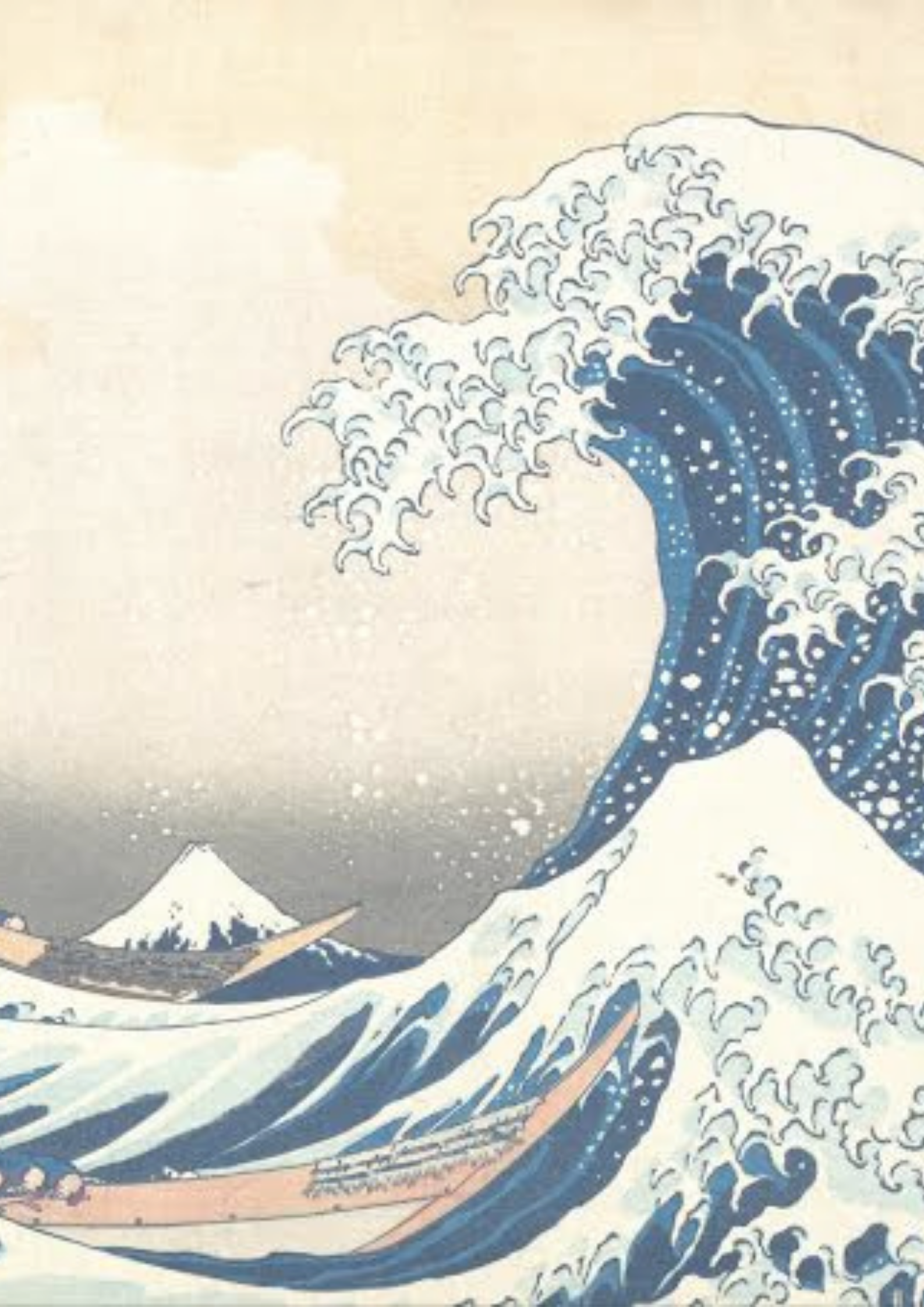
“36 Views”
At 50, after being struck by lightning, Japanese ukiyo-e (woodblock) artist, painter and printmaker Katsushika Hokusai had to learn his art all over again. A decade later he took up a grand project – a series of landscape paintings titled “Thirty-six Views of Mount Fuji”. It was grand not simply because of its scale, but also of a vision that could encompass 36 views of a mountain top. It is this vision that sustains art and life both. For our Opus #1 we sought submissions inspired by artworks that expanded one’s perspective and enabled one to have “36 Views” of the world and beyond.
- Hearts for Herat: Artist Nilofer Kamal on Art and Afghanistan – Interview by Pritha Mahanti
- শঙ্কা যেথায় করে না কেউ, সেইখানে হয় জাহাজ-ডুবি। (For the ship sinks there, where no one fears) – Artwork by Sarmistha Banerjee
- Reimaging Varvara Stepanova – Artwork by Shukla Sawant
- Does this picture frighten you? – by Pritha Mahanti and Jessica Jakoinao
- Nostalgia and Its Urban Home – Essay by Jonathan Laldinsanga Fanai
- Art and Other Miseries – Short Story by Sneha Baidya
- Painted Pain: Three Women Artists, Six Feminist Images – Poetry by Anna Lynn
- The Original Dirt-Bag Motion Detector Demonstration Model – Poetry by Colin James
- A Grotto of One’s Own – by Jessica Jakoinao
- Ink Spectres: A short history of a blot
 Ptenopus