
Debomita Mukherjee

Four women in their thirties. One afternoon of re-union with beers, potluck lunch and the burning desire to laugh at the absolute horror of the cinematic extrapolation of the ‘good woman.’ Let me set the context straight. As I write this, I must admit that this cinematic experience was shared by my friends and me, who have been in each other’s lives for over a decade.
Over the years, we have developed a deep sense of belonging to one another, for mostly being misfits or killjoys with respect to societal expectations. We have been the keepers of each other’s secrets, desires, hopes, aspirations, failures, jealousies, and disillusionments. We are culturally and linguistically Bengali, peri-urban, middle class and upper-caste women, with academic training in the humanities and social sciences.
This disclaimer feels appropriate because it is important for the reader to know that we tend to theorise everything. Dissecting mass culture is often our favourite leisurely activity on hot, sweaty Kolkata afternoons.
One such afternoon, courtesy of YouTube, we decided to watch what I can only proclaim as the greatest horror film of all time in Bengali cinema: Praner Swami (loosely translated as ‘Beloved Husband’ or ‘Husband of my Heart’). Although pran literally means life, in colloquial Bengali it is often referred to as beloved. The two-hour-twenty-six-minute musical, directed by Imon Saha and starring Firdoush and Rachna Banerjee, is a tenacious fashioning of the trope of ‘the good woman.’
The film opens with an old man looking for a potential bride for his grandson who has already rejected sixty-one matches. The grandson is portrayed as a capable man, determined to find the perfect housewife; one who will be the keeper of his home, while also being virtuous, loyal and submissive.

Soon we meet the perfect country lass—the 62nd match for the grandson. Her father describes her as “sarvagunasampanya”—a woman endowed with all virtues—emphasising her cooking and housekeeping skills. From the outset, these tropes lay out the expectations placed upon the protagonist. The narrative then proceeds to test these virtues repeatedly as she is pushed to the forefront of life’s struggles, most of which revolve around proving herself as a good wife and her nurturing values as a mother.
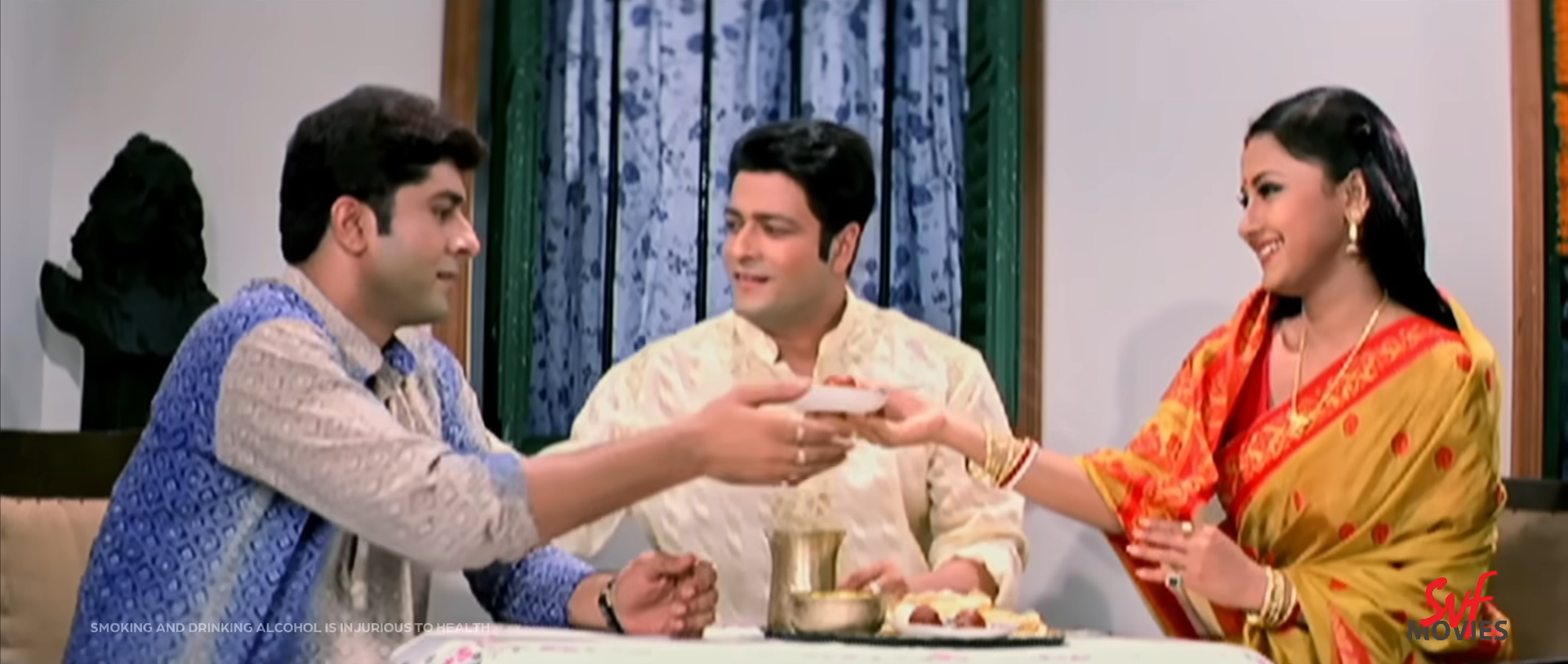
The plot is further complicated by the presence of another man who is obsessed with ‘having her.’ When she resists him, his blinding desire turns vengeful. He begins to manipulate situations in ways that cast doubt on her character and fuel the husband’s growing suspicion and paranoia about his wife’s fidelity. The story moves to insufferable climactic moments at multiple junctures, making the audiences’ heart race with fear of what comes next.
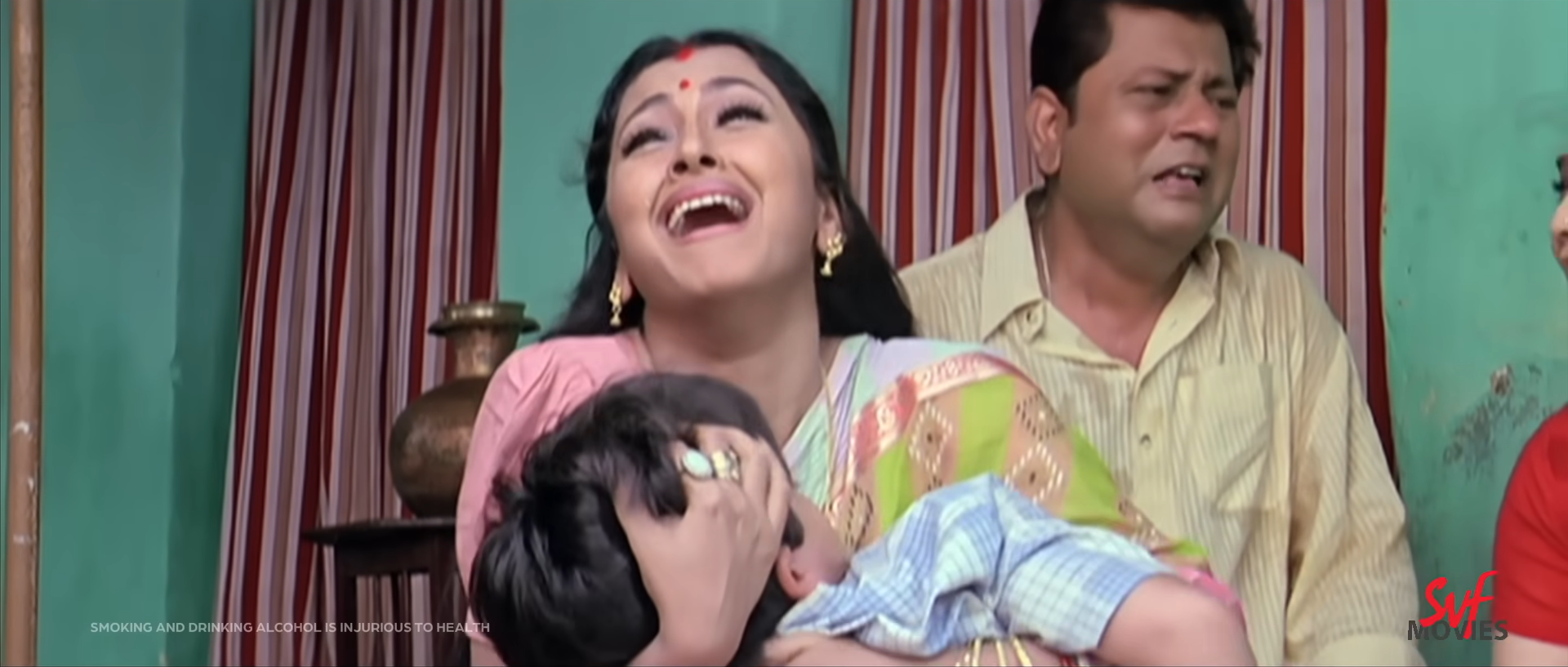
One such moment arrives when the protagonist loses her son through a vengeful plot orchestrated by the ‘other man.’ She unknowingly feeds her son biscuits laced with poison that had been passed on to her. When the child dies, she is trapped in an unbearable cycle of blame and shame.
What is both astonishing and horrifying for the audience is the repeated failure of the husband to recognise his wife’s contribution to his life. Instead every suspicion is accompanied with threats of violence. Yet the woman’s loyalty to the marriage remains unwavering. This loyalty is symbolised through repeated references to her sindoor (the vermillion powder, applied by married women to mark their marital status). The sindoor has often been invoked in Indian cinema and popular media as a marker of a woman’s unquestioning devotion to marriage (read: husband).
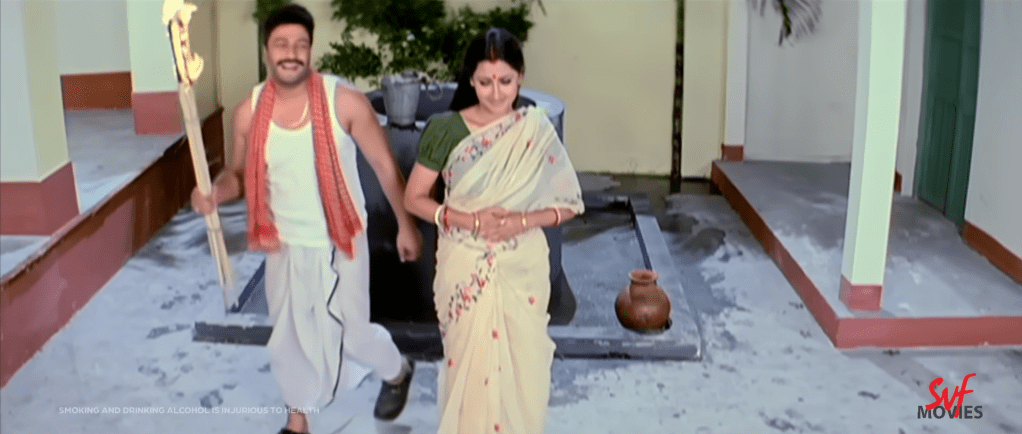

Praaner Swami is no different. In fact, the imagery invoked in this film begs one to question their own sanity as one watches a husband practice Hindu rituals of death on his living, breathing wife and then attempt to not just kill her, but dramatise the killing by slicing parts of her body and rubbing powdered red chili to the wounds. One might think of it as barbaric, and it most certainly is. The film, however, ends with the unfolding of the truth of the protagonist’s fidelity and innocence, as the ‘other man’ is unmasked as the culprit.
As we watched the film and laughed at the sheer horror of it all, I sat with this film for months. It stirred more questions in me than it probably intended to. I was forced to ask, why do I laugh at this grotesque and dramatised representation of violence, when Indian women, in reality, are at the receiving end of unspeakable, inarticulable, unfathomable violence? Do such films normalise the punishment of women who fail to prove their virtues as ‘good women?’ Or do they show that the idea of the ‘good woman’ is not only constructed through repeated violence on the psyche and the body, but also through the routine discipling of women’s conscience through practices of punishment and rewards?
The making of the ‘ideal woman’ entails the inculcation of several practices, particularly ritual purity—often marked through virginity—and sexual loyalty. This is often visually portrayed through women’s resistance to sexual advances by other men who are often the villains in the plots. Indian society’s moral panic around women’s chastity is recurrently portrayed through the lecherous desires of the other man whose presence threatens the monogamous family structure. In order to curb such threats, women are often at the receiving end of stricter laws against their mobility and the right to decision-making.
As a woman who has had access to education, knowledge and rights, among other things, the film’s rural setting also made me wonder whether the binary between village and city or urban and rural truly exists when it comes to women’s lives?
Yes, it does. Absolutely. Access is a privilege. Urban life affords certain essential privileges of knowing. My hysterical laughter at watching this film is itself a privilege. Knowing that I am not the intended audience is also a privilege. A privilege I have owing to my caste, class, and regional location, along with my access to higher education and global feminist discourse. This film, as much as it entertained us women in our thirties—whose realities were far from this visual fiction—also left us with an unsettling question. What do such narratives do to migrant women from marginalised communities trying to make it into the informal sector economy? Most must navigate a workspace that turns a blind eye to sexual harassment. Women are often demanded sex by employers, middle men, in return for work, be it in the agri-labour or urban informal sector. Both within the familial space and outside, women repeatedly face sexual violence anywhere between unwanted advances to life-threatening assault.
While the case of Bhanwari Devi remains in the feminist consciousness as a challenge to caste-patriarchy, it is also a reminder of the constant and routine sexual exploitation of women on-the-job and long-drawn legal battles. Women workers engaged in household and domestic work are often at the receiving end of unwanted sexual advances, verbal or physical abuse, and other forms of violence. Most such cases go unreported due to fear of loss of work, pressure from family and kin, and most importantly due to the nature of work that remains on the periphery of legal protection.
As for women engaged in sex work, they are often perceived either as victims or perpetrators of sexual immorality. In this context, I am reminded of Shyam Benegal’s complex storytelling in his film Mandi, that shows aptly which women are protected within the patriarchal fold, which women are made examples of, and which women are ‘disposable’ bodies that need no accountability.

When I think of Praner Swami over and over again, I am simply awed by the complexity of patriarchy in an otherwise unbearable film. The resounding impenetrable patriarchy is normalised, coerced and even invoked through a dying child blaming his mother. The film, however, constantly attempts to engage the audience in support of the ‘good wife’ who is repeatedly negotiating her family’s trust and acceptance. While everyone watching would agree that the husband is truly the villain, it is the woman’s success in all her life’s ordeals and conjugal tests, that purportedly brings relief to the audience. In the end, the unbrokenness of a conjugal home is always the desired outcome, even at the cost of a woman breaking herself into halves, hiding parts and forgetting about them to prove her loyalty over and over.
Watching this film invoked both horror and relief. Horror, of course, in the torture of sitting through it. But relief, because this was a bunch of 30-year-old unmarried women drinking beer, watching ‘cringe’ and surviving film-making, editing, PhDs, and what not. We know our realities are far from perfect, but we are given the privilege of dreaming a million possibilities. We are a privileged few among others who fail and fail and succeed (or not), despite being told in subtle and not so subtle ways, to find true happiness (marriage).
Debomita is a Doctoral Student in Gender Studies. She enjoys hate-watching terrible content in her sparsely organised free time. She is a full time cat-human, taking care of ten cats. She enjoys writing about culture, gender and patirachy.

