
Revisiting Ilakkiya Mariya Simon’s intimate exploration of home in a fractured world.
Pritha Mahanti

Sometime during my undergrad days, a lecture on Eliot’s Prufrock had ended on a rather sobering reminder: wherever we tread, there are the dead underneath. The thought that the professor chose to leave us with wasn’t exceptionally novel. It is one of those obvious facts that reasserts its weight upon reflection. Every successive age has inscribed itself into the soil through violence and loss, through the making and unmaking of graves, both literal and symbolic. Where we stand at a given time is only a thin stratum of the real, resting atop centuries of accumulated human presence. It is never a given, never an absolute and certainly never the constant that it easily betrays.
A reminder of this (one among countless others) was the discovery of skeletons by construction workers at Chemmani, in northern Sri Lanka, in February last year, that led the Jaffna Magistrate Court to initiate a preliminary investigation and order the exhumation and excavation of the remains. Over the course of a year, across six phases of excavations, forensic archaeologists have been able to identify the skeletal remains of 360 bodies. This is not the first time that Chemmani’s soil has spoken of the dead. Back in 1998, a Sinhalese Sri Lankan soldier on trial for the rape and murder of a Tamil school-girl, confessed to mass graves of nearly 400 bodies by the Sri Lankan Army during their takeover of Jaffna. The vicious civil war between the state and the separatist Liberation Tigers of Tamil Eelam (LTTE) had entered its fifteenth year. More than two decades later, the same land continues exhaling the dead. As former photo journalist Shyam Tekwani puts it, “The graves are not archives, but indictments, an argument against forgetting.” As I re-watch Ilakkiya Mariya Simon’s 2023 short film, ‘A Letter to Lanka’, I realise how telling it is that a “jar of ochre-coloured soil” from Jaffna becomes a catalyst for retracing home and history.
For Ilakkiya, a Sri Lankan Tamil by descent, born and brought up in Norway, home is at best both an imprint and an impermanence. It endures in cherished collectibles: the letter her grandfather wrote to her parents when she was about a year old, addressing her as “kutti papa” (Tamil for ‘little one’); or the jar of soil that fascinated her as an eight-year-old, brought from their hometown in Northern Sri Lanka by her aunt, Sister Jeyam, who was visiting Norway to re-unite with her sister after ten years. The ink on paper and the earth sealed in glass remain tangible traces of a distant homeland. These objects at once mark a link and a rupture of her ancestral ties to the island nation, in exploring which, Ilakkiya pens her own letter—A Letter to Lanka.

But this is not merely a correspondence of longing and nostalgia. In this ethnographic exploration of her roots, Ilakkiya quite literally digs through the layers. Her anthropological fieldwork in Sri Lanka in 2022—the same year the country spiralled into financial and political turmoil—throws open complex questions surrounding the personal and the political. It is in the figure of Sister Jeyam that Ilakkiya anchors her reflections on being at home in the world, while the former’s garden soil becomes the metaphorical extension of the keeper of stories.

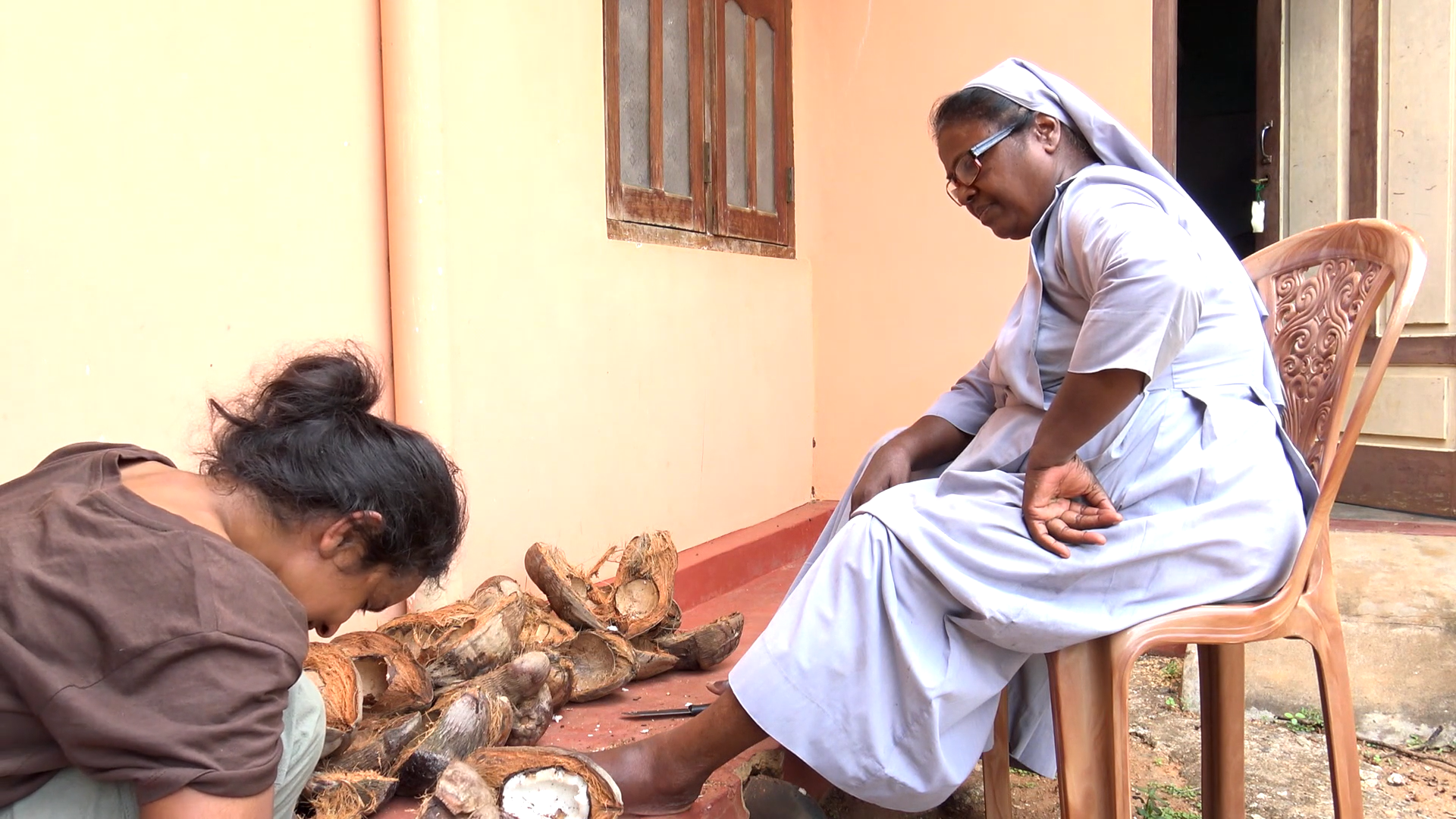
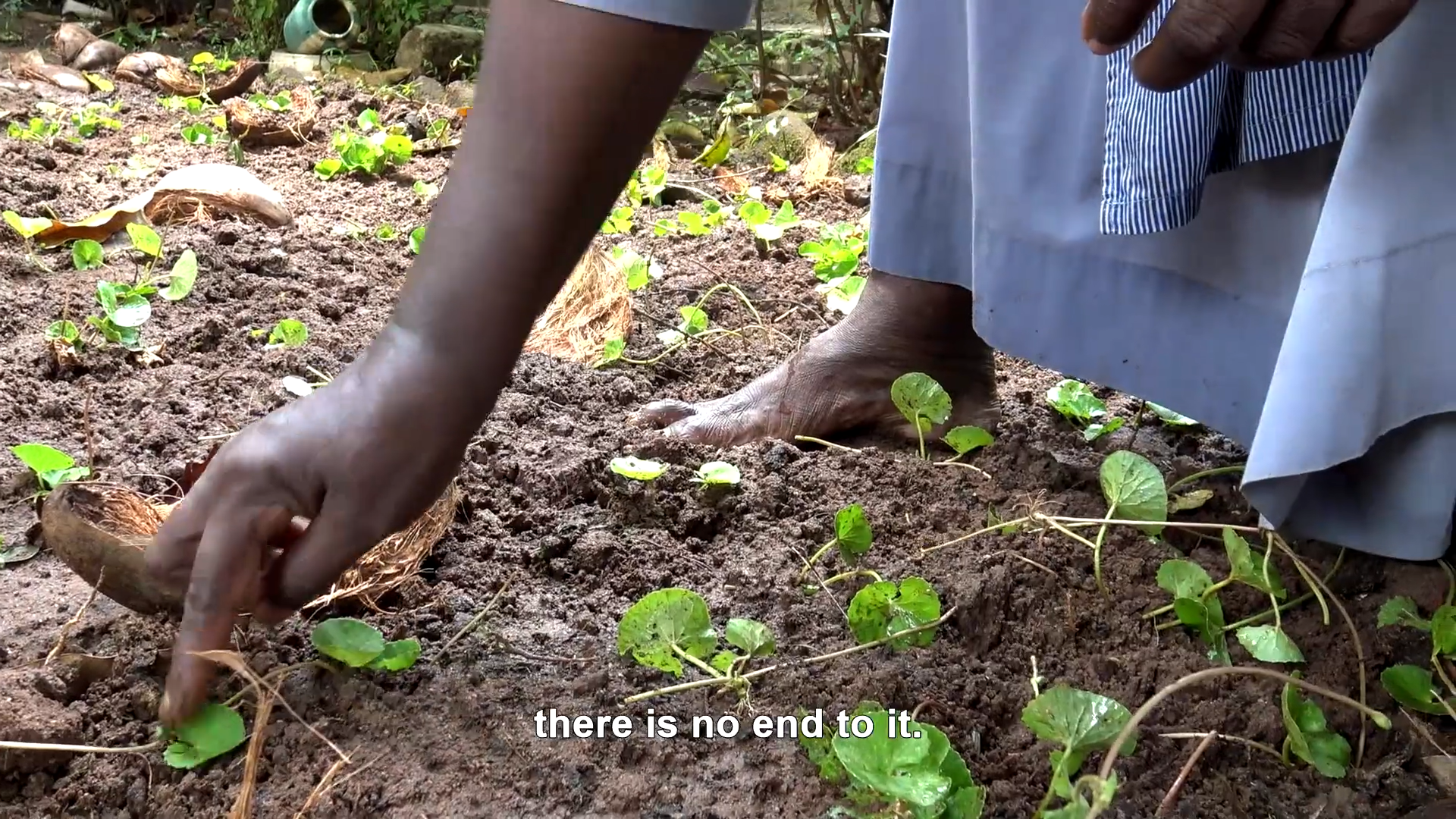
A Tamil catholic contemplative, Sister Jeyam was caught in the deadly crosshairs of the conflict along with her congregation while serving civilians in the jungles of northern Sri Lanka. Her lived experience offers a third gaze beyond the binaries that a civil war forces a nation into. As we watch Ilakkiya and her aunt spend days preparing the soil and planting new seeds and saplings, the complexity of a three-decade war gives way to the elemental logic of the soil: it breeds what it is fed. It rejects what is inharmonious and sustains what endures.
As Ilakiya begins to read out her letter, the landscape of an island gradually unfolds, but in fragments—rows of broken palmyras, a decimated neighbourhood as seen through a window, a view from a train interrupted by the bars of a bridge over which it passes. Interspersed with these are home videos, family photographs and archival footage through which Ilakkiya weaves a tapestry of memory, history and materiality of a land that is at once familiar and forging itself anew. However, an intimate letter to a foreign homeland, besieged by its own demons, is fraught with complications. Could it even be called a homeland? And what constitutes home for people made to stay away from it? How personal could a letter afford to be when it speaks to a land experiencing seismic socio-political shifts?
When we meet to discuss her film over a zoom call, Ilakiya turns her camera to show me a very snowy morning in Norway, a country where she grew up being told that she doesn’t belong there. But she didn’t grow up thinking that she should be in Sri Lanka either. Being at home in the world, therefore for her, is fundamentally rooted in non-belongingness and is an ever-changing feeling. As a child she had always contested this otherness of not belonging. Now she knows being at home in the world, whether in the diasporic context or otherwise, is too fraught a question to have a final answer.
Yet, this in-betweenness allows her to move between perspectives, to negotiate space and most importantly to listen deeply—a practice that she treasures as an anthropologist and as part of a section of the diaspora that managed to see beyond the myopic politics of a war where the opposing factions increasingly mirrored each other. Unlike most Sri Lankan Tamil households who had a poster of Prabhakaran—the audacious figure of Tamil Nationalism—adorning their walls, Ilakkiya’s home had a prized copy of The Broken Palmyra. Co-authored by Sri Lankan Tamil activists and academics in the late 1980s, the book remains a prophetic and seminal critique that identified early on “the theoretical vacuum, lack of political creativity, intolerance and fanatical dedication” of the Tamil Tigers, whose politics ultimately reinforced the arrogance and brutality of a Sinhala-Buddhist chauvinist state. The assassination of one of its authors, Dr. Rajani Thiranagama, was one of the many instances where violence was used to silence those who dared to dissent.
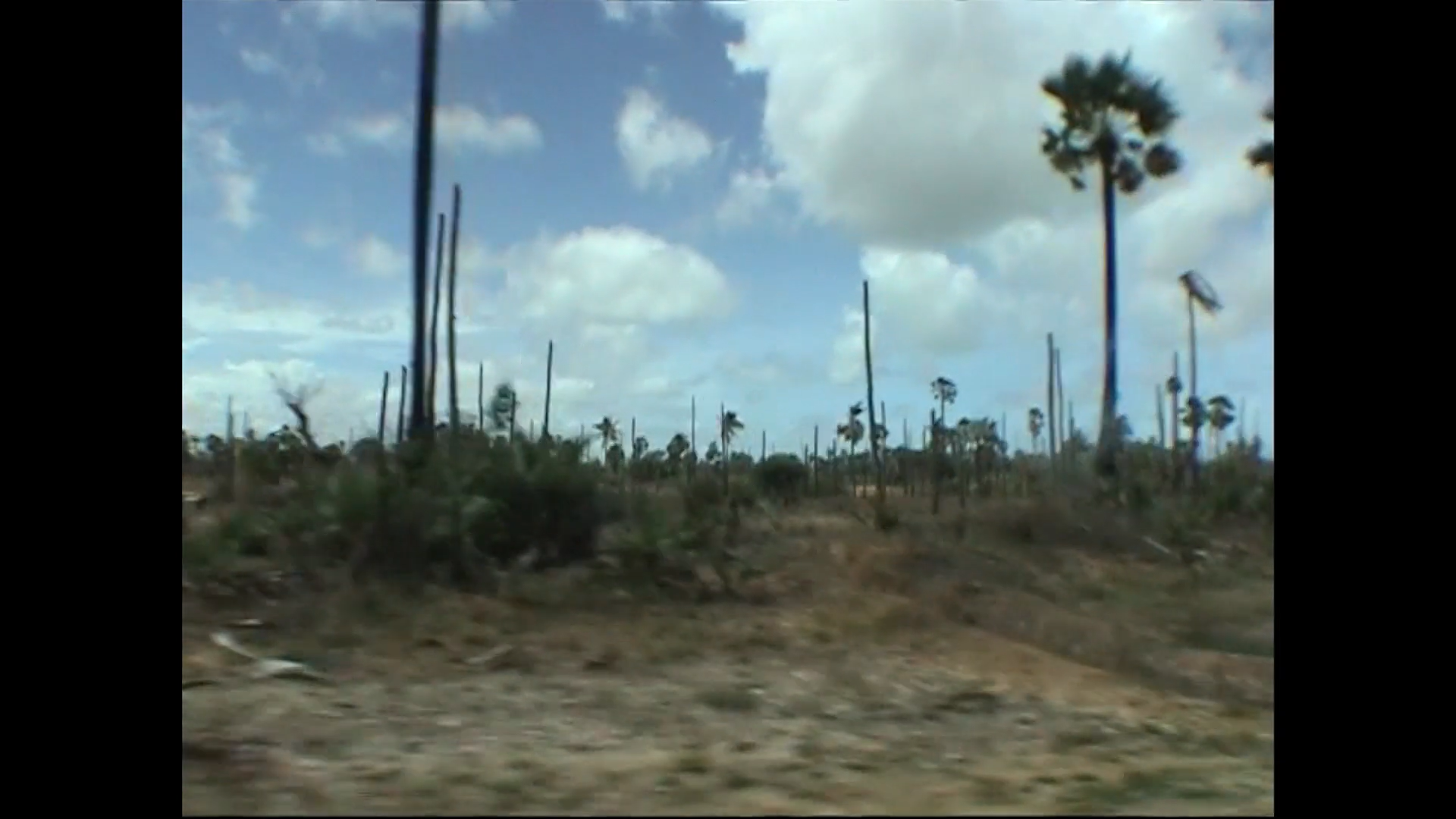
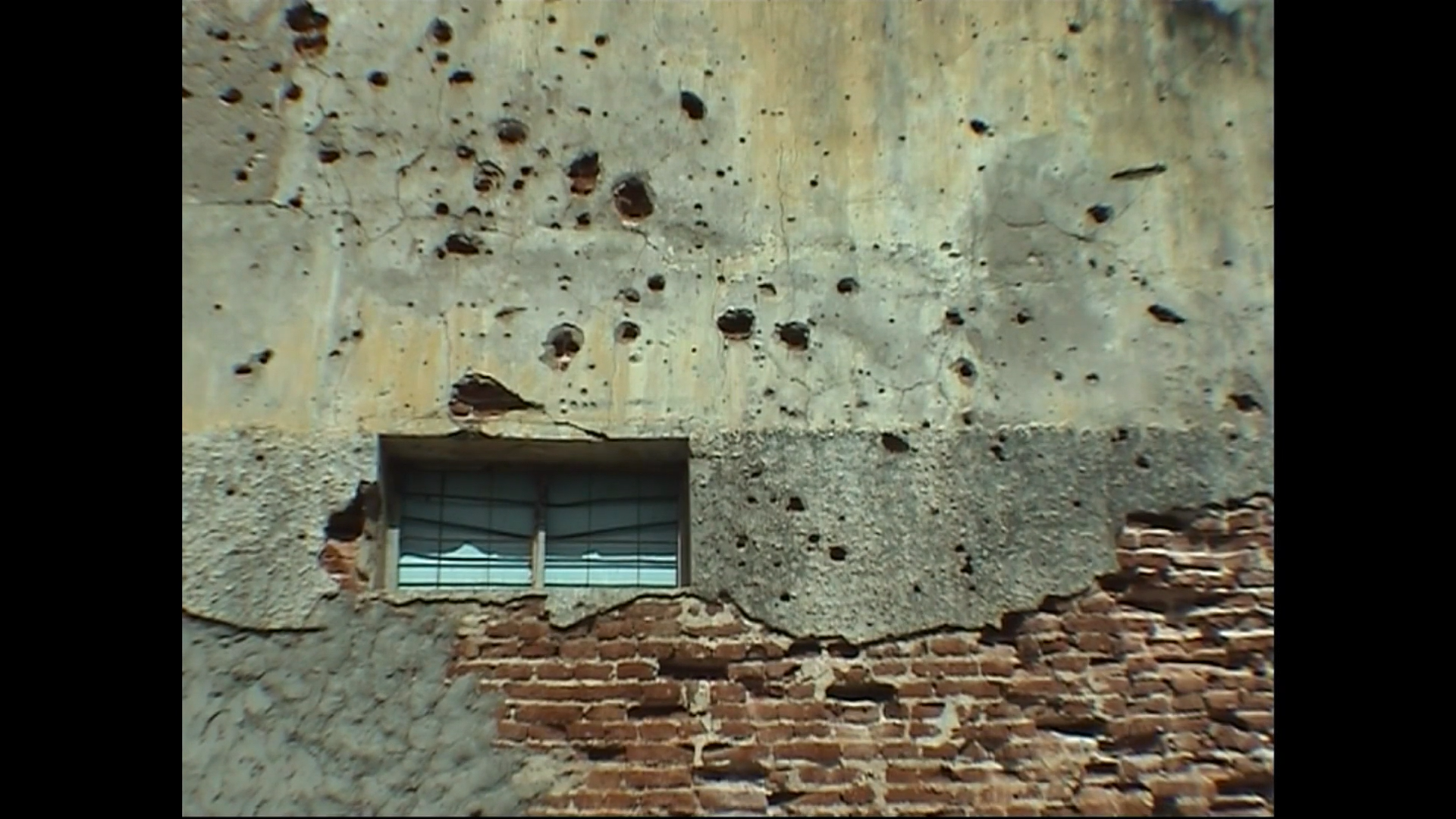
Stills from A Letter to Lanka: archival footage from northern Sri Lanka, 2002.
Ilakkiya’s tribute to the book is her reverence for stories of ordinary individuals, like Sister Jeyam, who bore the brunt of a bloody war and managed to be resilient and humane throughout it all. In a sequence that captures the visible traces of war on damaged homes, bullet-riddled walls, burnt vehicles and rows of broken palmyras (central to the local economy and culture), Ilakkiya voices her wariness with numbers. “Numbers make no room for stories” she says. Because numbers are dispassionate. They reduce unfathomable tragedies to neat categories, unlike a schoolbag unearthed at the mass grave site in Chemmani or those soaked in blood post the recent bombing of an elementary school in Iran. Only stories hold power, hope and the possibility of redemption.
One such story shared by Sister Jeyam reveals the liminality of a warzone where all facades of man, machinery and might fall apart before the unsurpassable force of kindness. Back in the late 1990s, Sister Jeyam and her congregation were forced to leave Kilinochchi and arrived at Madhu following the Jayasikurui attack by the Sinhala army. The congregation quietly took care of the people sandwiched between the LTTE and the government forces. One day the guerillas launched a surprise attack on the Sinhala army camp. Caught off guard, the soldiers could barely retaliate amidst the incessant bombing and shelling. A young soldier escaping from the camp asked Sister Jeyam for some water. She filled up a bottle for him without caring for his uniform. For her he was just a man dying for a drop of water. “The attire that she carries signals something meaningful in a context of war. It is synonymous with safety”, says Ilakkiya. Much like the lanterns that the sisters would hang in the trees to reassure civilians of their presence.
And yet this is a story that many do not want to be told, for it’s a crack in the ideological armour behind which hides the naked barbarity of a conflict preoccupied with smothering innocent lives. “What have we achieved?” Sister Jeyam asks. Many like her are forced to bear the weight of these stories alone, with no one to share them with. For the war might be over, but it lingers on in muted forms—in the silence of communities, in the censorship of the self, in the deliberate denial of justice. Lost in the footnotes of grand narratives, these are the stories that matter, the memories that write collective history.
It is in the filmic space, carefully shaped by Ilakkiya as a visual anthropologist, that Sister Jeyam is able to gradually open up, allowing the catharsis to unfold. “I am like the soil”, she says; a witness, keeper and guardian of what must not be forgotten. For the filmmaker, it was a tough choice at the edit table. She describes her personal reconciliation with Sri Lanka as both a grieving and healing process. And it is Sister Jeyam who, in turn, holds the space for her. As they garden together, listening and sharing stories become like loosening the dense, clumpy soil, so it can breathe, grow, and flourish.
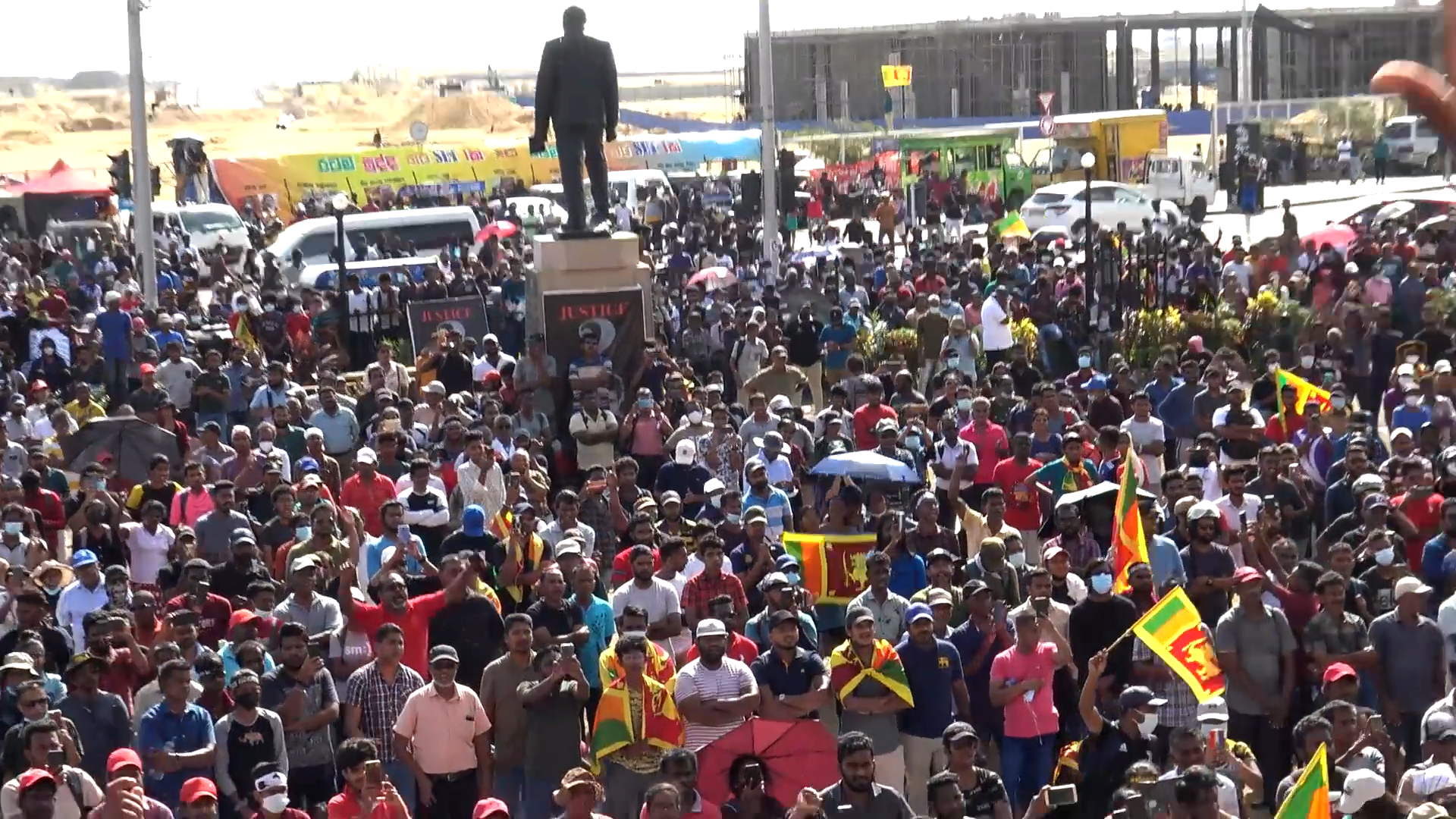
The film could very well have been about her aunt alone; of the many more stories she carries of horror and hope from the years of war. But where would that leave a young anthropologist and the tormented homeland she was coming to terms with? In Sri Lanka when the Aragalaya (Sinhalese for ‘The Struggle’) was at its peak, Ilakkiya witnessed something quite different. The series of mass protests that began in March 2022 as the tipping point of a long drawn economic crisis united the nation in ultimately overthrowing Gotabaya Rajapaksha’s incompetent and corrupt establishment. In the film, she takes us inside a community kitchen where the old and young across religious and ethnic identities come together to prepare hearty meals that sustain uprisings. “Despite the country’s violent history, that was a moment when many hands came together to sow new seeds for the future”, Ilakkiya writes.
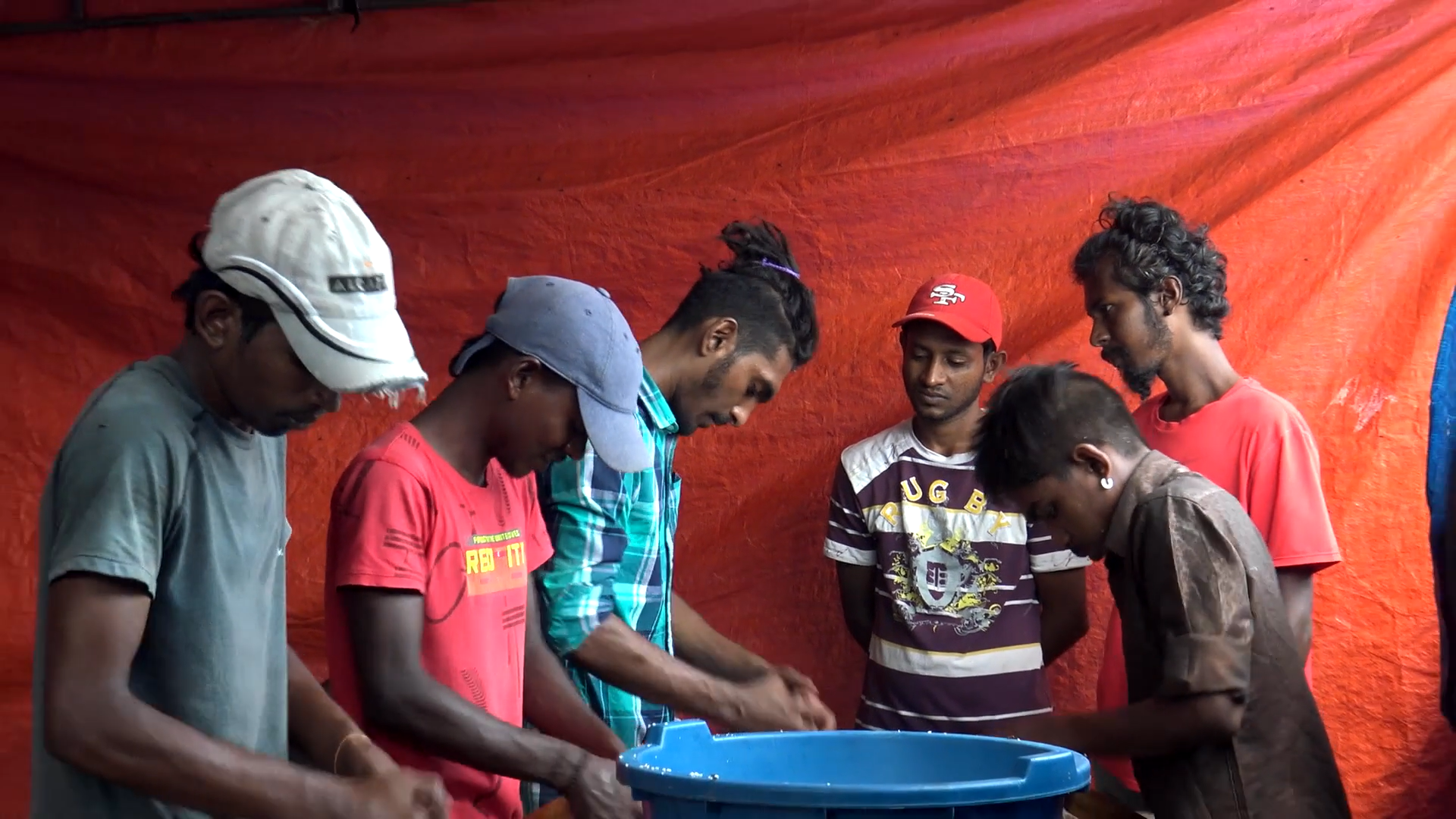
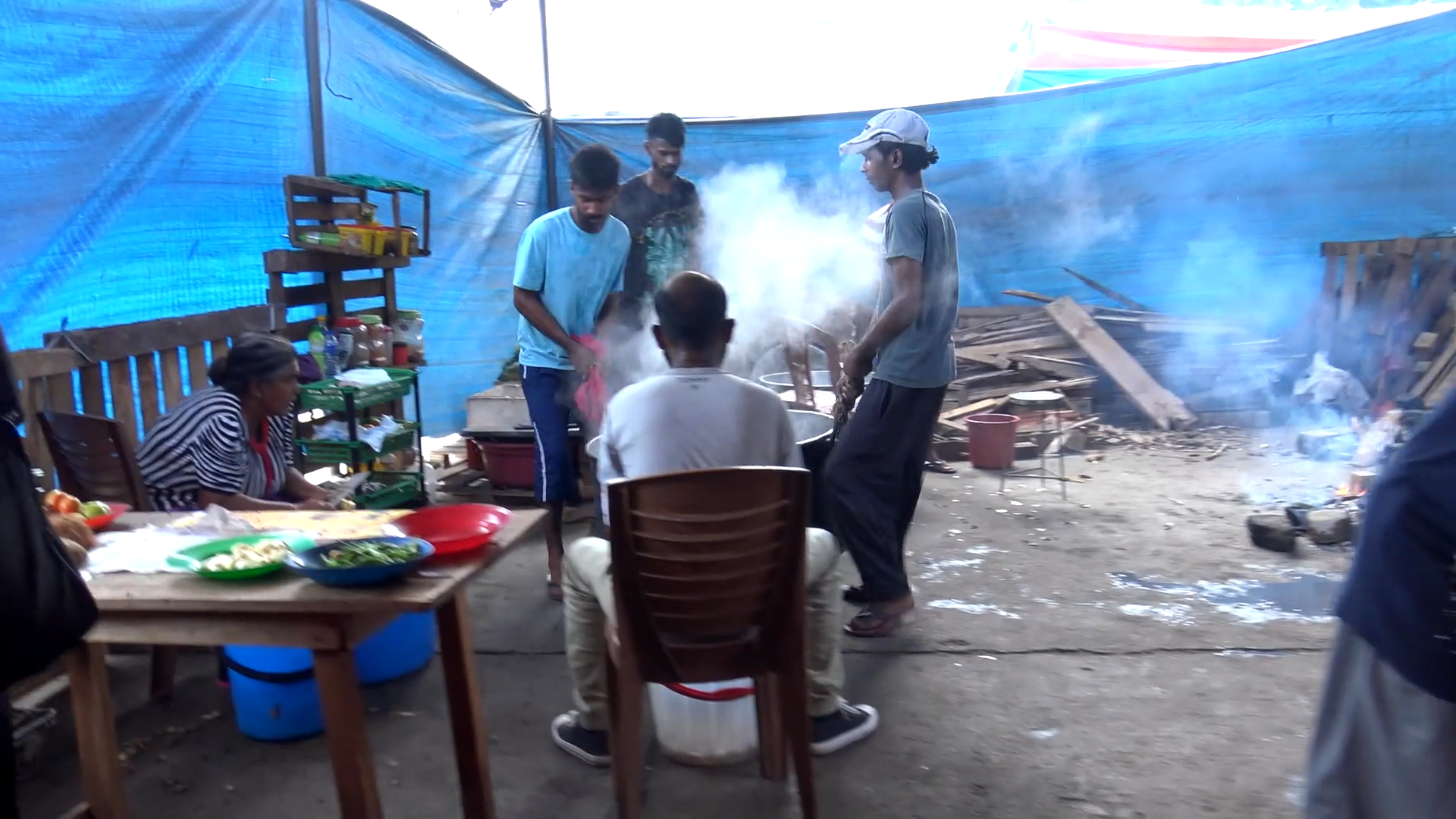
Stills from A Letter to Lanka: Scenes from a community kitchen during the mass protests.
It is ultimately this desire for change that not only emerges as the cornerstone of a nation’s encounter with its new reality, but also of Ilakkiya’s pursuit of wisdom and anchor in a troubled world. In concluding her correspondence with her ancestral land, Ilakkiya borrows the potent words from Octavia Butler’s 1993 speculative fiction novel The Parable of The Sower. As the camera lingers on crowds gathered by the beach and kites rising into the wind while life goes on under the shadow of crisis, we hear Ilakkiya’s voiceover say, “Whatever you touch, you change. And that what you change, changes you.” Sri Lanka changed her.
A Letter to Lanka is not just a personal and political intervention but also a methodological one. She explains that a letter back to an island might strike some as an arrogant gesture: an anthropologist daring to write a personal letter to a place. This is, of course, a longstanding critique of anthropology itself, a discipline whose colonial origins are reflected in its emphasis on distance, on observing people and phenomena from afar, and claiming objectivity.
Ilakkiya’s film, however, is a step towards inserting the ‘I’ in anthropology. By doing so, she stakes a claim for decolonial subjectivity—an attempt often sadly dismissed as ‘emotional’ or ‘feminine’. Ilakkiya believes that cold, objective and academic reflexivity for an anthropologist is already a lost cause. It cannot exist without the eyes, ears and mind one carries into a place. Instead, she allows intimacy, vulnerability, and the rhythms of lived experience to guide the research, insisting that anthropology does not have to be detached. One can study, listen, and learn while still being part of the story. And that is where the wisdom lies.
Change, as Butler’s young protagonist reminds us, is divine. “God is Change”, she says and therefore one can shape God by changing things around them. From a seed transforming into a sapling to a people harnessing their own destiny, change is transformative, redemptive and all-pervasive. And yet we resist it for the comfort of status quo, which carries the illusion of safety and minimum risk.
Across the world, from Gaza to Sudan, as we watch people being ripped apart from the soil that sustains them, Ilakkiya insists we need to recognise upfront the larger structures of exploitation that governs the world; structures through which Western democracies continue to build themselves on the blood and sacrifice of colonial systems. She is quick to add that even in Norway, renowned as a ‘peace nation’, the sense of being at home depends on likeness: the more alike you are with others, the more at ease you feel; the more different, the more alien.
Through A Letter to Lanka, Ilakkiya shows that uncovering one’s roots often involves baring oneself, holding space and, most importantly, listening. Being at home in the world, then, is about coming to terms with the other. In this quiet act of attention, anthropology becomes something alive, tender, and profoundly human.
The film is currently available through Alexander Press and on demand through the Royal Anthropological Institute’s RAI FILM catalogue.

