
Jessica Jakoinao
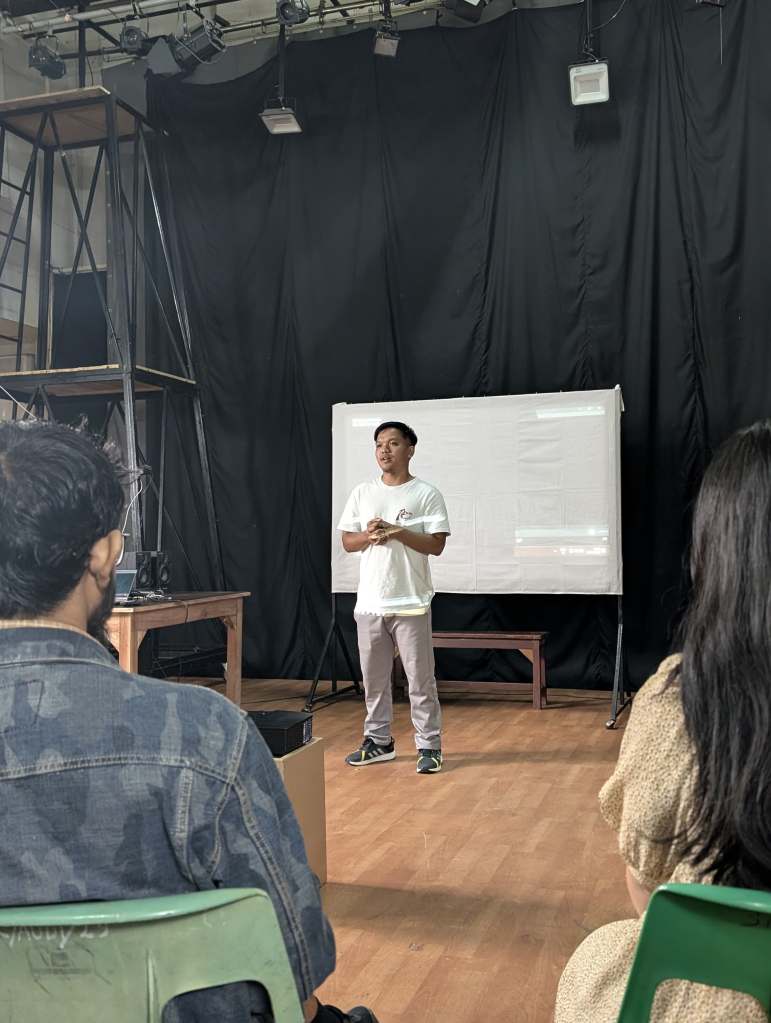

On the third evening of a five-day artist-led workshop in Shillong last October, as we packed up for the night, Marba was still on the phone. The rest of us were closing the hall, gathering scattered belongings, while he paced outside, locked in what looked like a tense exchange. When we brought up his things, he rushed back in, nodded a quick thanks, and slipped into his jacket in a whirlwind—his arms finding the sleeves as we held them up for him, all while still on the call. We learned the next morning that it had been with a client—a frustrating back-and-forth over a mural project gone wrong.
These kinds of stories weren’t unusual. After long days of workshops, we’d sit together in the evenings, unwinding over shared meals and conversations that drifted from technique to philosophy, from ambitions to anxieties. One night, it felt almost like an AA meeting—but for artists. A space to vent, to make sense of the realities of working in the arts. That’s when Marba let it all out—how a client had once commissioned him for an exact replica of The Great Wave off Kanagawa by Hokusai, refusing to see the problem with treating an artist like a human photocopier.
Francis had stories too. Over time, we realized these weren’t isolated incidents but part of a larger pattern—one that spoke to the deep-rooted struggle for recognition, fair pay, and respect. Making art in Northeast India isn’t just about skill or creativity; it’s about navigating an industry still learning how to value artistic labour. And sometimes, all you can do is rant.
In this piece, we hand the mic to two artists—Marba Kamki from Arunachal Pradesh and Francis Lalramdinngheta from Mizoram—who lay bare the realities of working with clients. From unreasonable demands to a fundamental lack of respect for creative work, they expose the absurd, the exhausting, and the all-too-familiar moments of exasperation. This isn’t a polished reflection; it’s a rant, raw and unfiltered.
The ‘Great Wave’ of Frustration
“A friend asked me to create a large-scale replica of Hokusai’s famous wave print for a bar opening. Initially, I agreed and started working, but I wanted to add some texture and depth to make it unique. However, the client insisted on an exact replica, which was frustrating but understandable since it was his project.
I reworked the piece meticulously, using grid lines to perfect every detail. It was a demanding process, especially with my cramped workspace and upcoming exams, but I finished it as requested. When the client picked it up, he transported it precariously on top of his car on a rainy night, which worried me. Fortunately, it reached the bar safely, and he seemed satisfied.
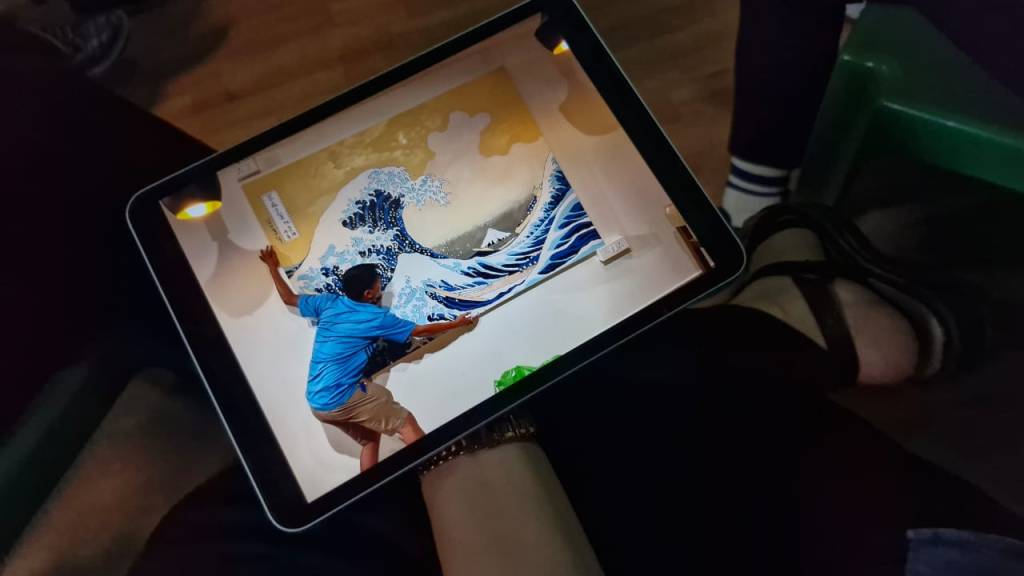

Marba and his work. Image courtesy: Jessica Jakoinao
Later, at the bar, someone who had spent time in Japan criticized the accuracy of the Japanese calligraphy on a different part of the project, which was unrelated to my work. That part had been completed by one of my juniors. The bar owner, disappointed, requested a refund for the calligraphy.”
The Unfinished Mural
“In 2020, during the COVID-19 lockdown, five of us students took on a mural project for a classmate’s maternal uncle who owned a resort. We agreed to work for just ₹2,000 each—far below our usual rates—because it felt more like helping a friend than a job.
The trouble started early. The resort owner, despite inviting us, refused to provide food or lodging. We had to cook for ourselves, and to our shock, we were even charged for firewood. Our frustration grew, but our friend, eager to complete his first commission, convinced us to push through.
After four days of work, unpaid and exhausted, we left the mural unfinished. When we later asked for our payment, the owner claimed that letting us stay ‘for free’ was compensation enough.
Months later, our friend—the one who had brought us the project—passed away due to medical issues. After that, we chose to leave the incident behind. In the end, what remained wasn’t just the frustration, but the time we had spent together—the laughter, the camaraderie, and a lesson we wouldn’t forget.”
The “I’m Not Just a Labourer” Experience
“I was commissioned to create two murals under Swachh Bharat on specific walls at a site in Doimukh, Itanagar. The person who approached me was a relative, and I trusted him since he also worked for the company that hired me. I explained my pricing, and he assured me the company was okay with it. Based on his approval, I bought all the materials—paints, brushes, even rain covers since it was monsoon season—and started working.
The walls themselves were challenging. They were long and narrow, which required adjustments to the layout of the mural, including stretching the design to cover the space. I even checked in with the employees on-site, asking them to review my work as I went.
After I completed the murals, I returned to Shillong. A few days later, I received a call from a man—around 50 years old—who criticized my work harshly, saying things like, “Marba bhai, just wash your work from this wall.” Then I asked why? And he replied “Aisa to class 4-5 ka bacha karta hain. I’ve heard good things about your work and qualifications. I thought aapka kaam to bohot zyada acha hoga lekin yeh to itna ghatiya kara hain. Hum to paisa bhi nahin dega. Ye pura wash karke sahi se banao.” (This is like the work of a child in class 4-5. I’ve heard good things about your work and qualifications. I thought your work would be a lot better but this is trash. We will not give even a penny. Wash the entire thing and redo it correctly.) It was shocking because I’ve never faced that kind of criticism before.
I asked him to send pictures or videos of the issues he was referring to. When I reviewed them, it turned out he wasn’t even talking about my mural. He was complaining about the poor quality of the background wall, which had been prepped by labourers hired by the company. I had applied an additional coat of primer myself, even though it wasn’t my responsibility, but the surface remained uneven.
Despite this misunderstanding, the client refused to pay me the full amount. The agreed price was ₹32,000. After much negotiation and involving other employees, I managed to recover ₹20,000. I wasn’t satisfied because even that didn’t fully cover my material costs, but I decided to let it go and take the experience as a lesson.”

When ‘No Budget Limit’ Means ‘I’ll Steal It’
“I gotta say, I love most of my clients. They’re always a blast to work with. But, of course, there are some exceptions. Like this one guy who wanted a digital painting of his family portrait in a caricature style. He told me not to worry about the budget, that he was willing to pay whatever. I’m thinking, ‘Wow, this guy is awesome!’
So, I start working on the commission, and it’s a lot of trial and error. We’re going back and forth, adjusting the faces to make sure they look like them. It takes forever! But finally, after what feels like an eternity, we’re both happy with the painting.

Then, it’s time to pay up. I mention my price, which is super reasonable, and he freaks out. He doesn’t want to pay the full amount, not even half! He’s trying to lowball me. I’m like, No way, I tell him, Forget it, I won’t send you the high-quality version. Just delete the sample I sent you and respect my work.’
I’m done with the conversation, and I just stop responding. But then, a month later, I’m scrolling through Instagram, and I stumble upon his profile. And guess what? He’s posted my artwork, and his friends are all commenting, ‘Who drew this?’ And he’s like, ‘Oh, I did!’ Hahaha, can you believe it?”
When ‘I Need a Logo’ Turns Into ‘I Never Wanted One’
“So, my friend, who’s also an artist, asked for my help with a commission she had. The client wanted a logo, but my friend doesn’t do digital art, so she asked me to collaborate and we could split the bill. Sounds like a fair deal, right?
Anyway, the client had a specific design in mind, so my friend sketched out about 5 different pieces on paper. The client loved one of them, and then it was my turn to bring it to life digitally. We made sure to keep the client in the loop every step of the way, asking for their feedback and approval. But, oh man, it was a struggle. The client was super uncooperative, always giving us late feedback and making us wait. We had to make a ton of adjustments and redesigns, and I even had to custom draw the font to their liking. It was a lot of work, let me tell you.
Finally, after all that effort, we sent the final product to the client and told them how much they owed us. And then… crickets. No response. We had to reach out to them again, and that’s when things got really ugly. The client said they didn’t want the logo done digitally, which they never mentioned during the entire process. And then they had the nerve to accuse us of just downloading preexisting images from Google and pasting them into the logo. I mean, come on! I drew those images myself, and I have the workflow to prove it.
The client also said they didn’t want the actual logo, claiming they already had three logos. Um, what? That’s what they asked for in the first place! What’s the point of ordering a new logo when they already have three logos? And why did they ask for a new logo in the first place?
They tried to lowball us, saying our work wasn’t worth the price because it was just a Google image. I was livid. After I explained the time and effort that went into creating the logo, they finally paid up. But, honestly, I was so disrespected that I didn’t even want the money. I sent it back and told them not to use my work.”
…
Art is fun but frustrating too. Marba and Francis didn’t sugarcoat the realities of being an artist in Northeast India—it’s a tough gig that demands resilience, adaptability, and a good sense of humour. Clients, especially in government setups, often see artists as “labourers who earn daily wages,” failing to recognize the years of practice behind each piece. Marba learned this the hard way after hearing, “If it’s so expensive, why don’t we just hire labourers to do it?” Since then, written contracts have become his best friend.
Artists in Mizoram and Arunachal also face a cultural shrug at art, scarce funding, and an education system that treats creativity like an afterthought. Francis described it as feeling “stuck in a cage” with “hardly any funding for art programs” and no government-funded galleries. But did Marba and Francis pack up their easels and call it a day? Nope. Marba mastered the art of boundary-setting, while Francis turned to creating his own platforms on social media and organizing exhibitions with other local artists.
Their advice? Marba says, “Formal agreements are crucial—verbal commitments aren’t enough.” Francis says, “Stay true to your passion and vision … with persistence and hard work, you can make a name for yourself.” So here’s to Marba, Francis and others artists for letting off some much-needed steam along the way and marching on!
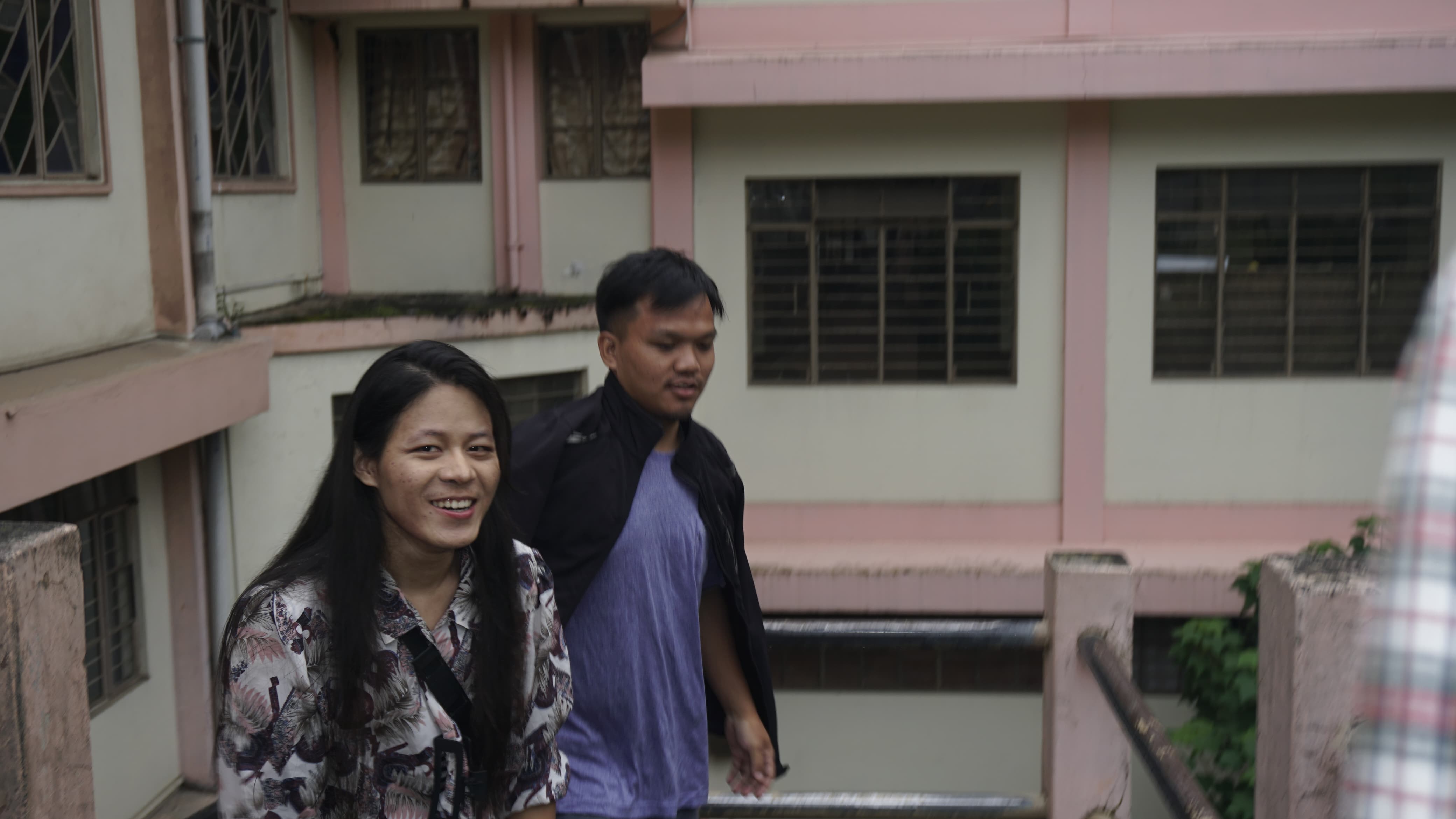
Marba, who completed his Master’s at Manipur University, first worked in hyperrealism before shifting toward more expressive styles. His current work draws from Arunachal Pradesh’s rich oral traditions, using semi-distorted figures, bold tones, and layered hues to move beyond mere replication and engage with deeper cultural narratives.
Francis, based in Aizawl, is a multidisciplinary artist skilled in painting, sculpture, and fashion design. His work blends traditional and modern techniques, reviving near-forgotten stories from his Mizo heritage to spark appreciation for these fading traditions. Whether working in oil, acrylic, watercolor, ink, or digital mediums, his art serves as a bridge between the past and the present.
 Ptenopus