
By Pritha Mahanti

If you find yourself at the Agartala International Book Fair, chances are that you will end up at a rad looking stall, with surreal charcoal sketches spilling all over its white interior like spirits at large. The enviable display of zines, posters and comic books would be hard to resist even for a strict philistine. Can one really walk past a Psychera Comix where you see an avid keeper of stars himself bursting into one? Or resist a sneak peek into ধ্রুবতারা (Dhrubo tara) whose cover might remind you of the good old days of family portraits?

This is Cross Cat Collective, an independent comix crew from Tripura, dedicated to self-publishing comics, zines, graphic novels, stickers, and posters. But more than just making cool art, they’ve built a wide community of scribblers, writers, activists, and self-taught artists—all coming together to create and collaborate. What sets Cross Cat apart is its very existence. Tripura isn’t exactly a fertile ground for independent publishing—comic books and graphic novels remain a niche interest of a small minority, and the region lacks the infrastructure for the arts, let alone a support base for an alternative art movement. Yet, Cross Cat thrives, fueled by the love, passion and resilience of a bunch of folks who delight in telling untold stories, archiving hidden experiences, and starting conversations that Tripura has never seen before.
The First Purrs of Cross Cat


Partha Banik, one of the founders of the collective, has been its driving force and unifying presence. His love for comics began with a childhood fascination, when his father brought home a copy of হাঁদা ভোঁদা (Simpletons named Hnada Bhnoda), later fueled by glimpses of DC and Marvel comics. Growing up in a middle-class household, such comics were a luxury and, over time, his passion faded—even a Fine Arts degree didn’t reignite it. That changed in 2016 at the Kochi-Muziris Biennale, where a fateful meeting with Anand Shenoy cracked open the vast world of comics once again. “It felt like stepping into an entirely new universe”, he says. Anand had kicked off a comics collective called Pagal Canvas with a friend and later launched his own anthology, Zoo, in 2020. Partha’s meeting with him and their shared enthusiasm led to more creative collabs, and with Roshni Panday, Partha’s friend and co-creator, by his side, he fully immersed himself in the world of comics and publishing.

The seed for Cross Cat was sown in the first issue of Psychera launched in 2020. While in Mysore, Partha Banik and Roshni Panday were struck with inspiration when they met a young boy with dyslexia, struggling against an educational system that didn’t understand him. His teachers recommended a special school, but his father hesitated—trapped by societal stigma. “This experience inspired us to combine my artistic practice with Roshni’s psychology background to challenge these stigmas and spark conversations about mental health and inclusivity”, explains Partha, who had, at the time, just finished his fine arts degree while Roshni was preparing for her postgraduate studies in clinical psychology.
Before they knew, Psychera resonated deeply, sparking an overwhelming response. More and more people came forward to share their stories, and soon, the project grew beyond a single comic—evolving into Cross Cat Collective. “Cross” stood out, echoing the stitches Roshni loved in crochet and knitting. “Cat” was a natural fit—always present in their lives. Cross Cat clicked, uniting their personal and creative identities.

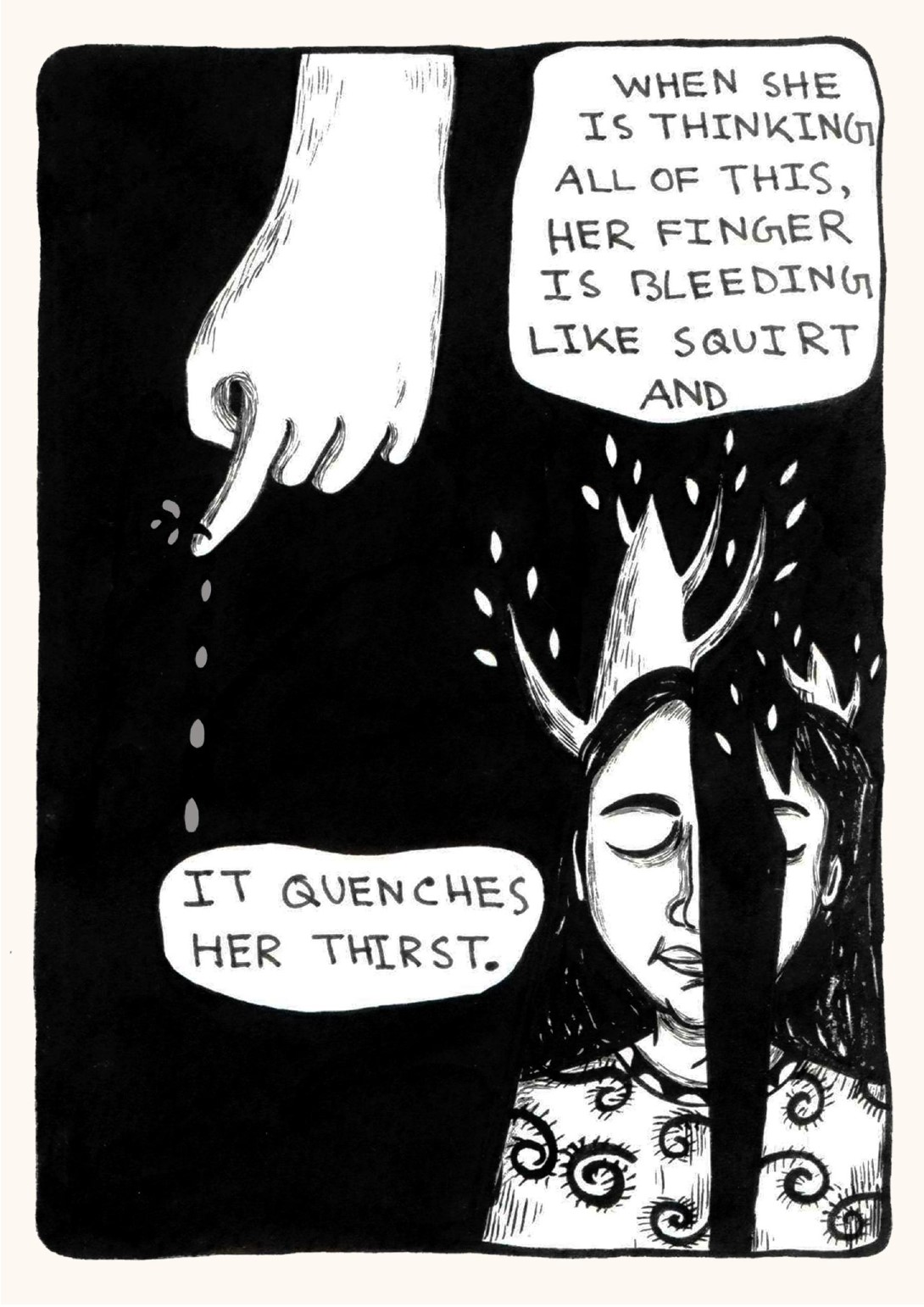
Pages from Psychera-I
Psychera-I tackled the mental health condition called Apotemnophilia, a rare condition where individuals feel a strong urge to amputate a healthy limb or become paralyzed, sometimes leading them to harm themselves in an attempt to justify the desire. It sparked crucial conversations that led to Cross Cat’s first project as a collective—Psychera-II. It featured 11 contributors who explored topics, otherwise considered contentious, like masturbation, child sexual abuse, and gender identity. Among them were মুক্তধারা (Mukhtodhara)—a short comic that raised questions around fragile masculinity; The Blue Gone Blur on Retrograde Amnesia where individuals lose memories of events that occurred prior to its onset; and two poems, রুপান্তর (Rupantar) and Adolescence, that depict the transformative phase of teenage. Psychera-II paid tribute to the renowned psychologist and philosopher William James, grounding their work in history while pushing into uncharted territory.
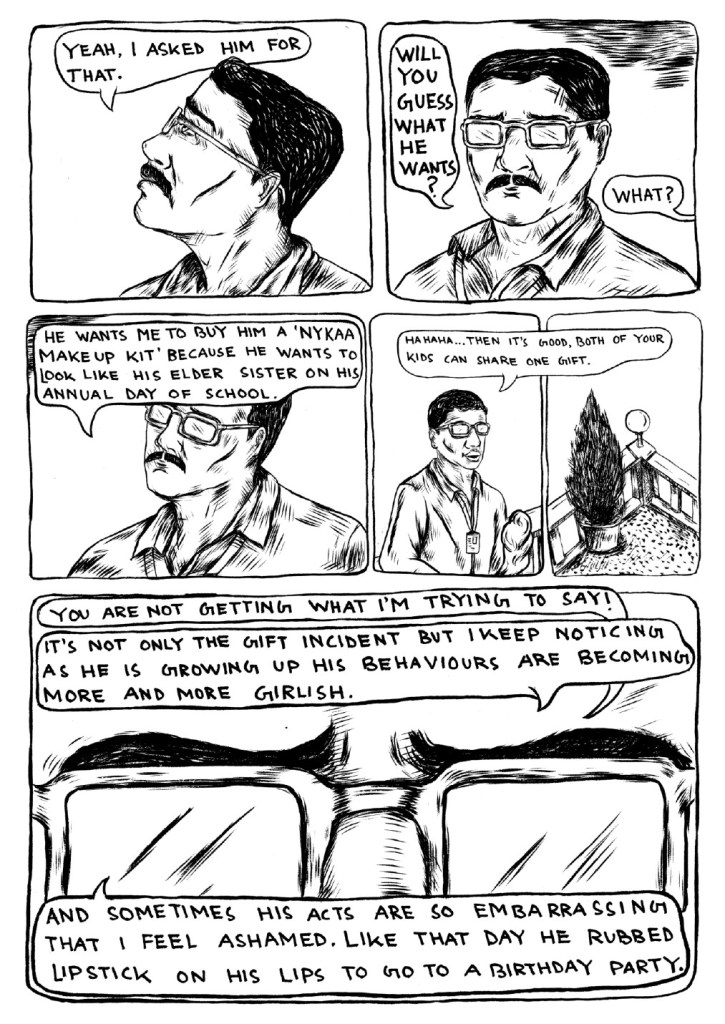
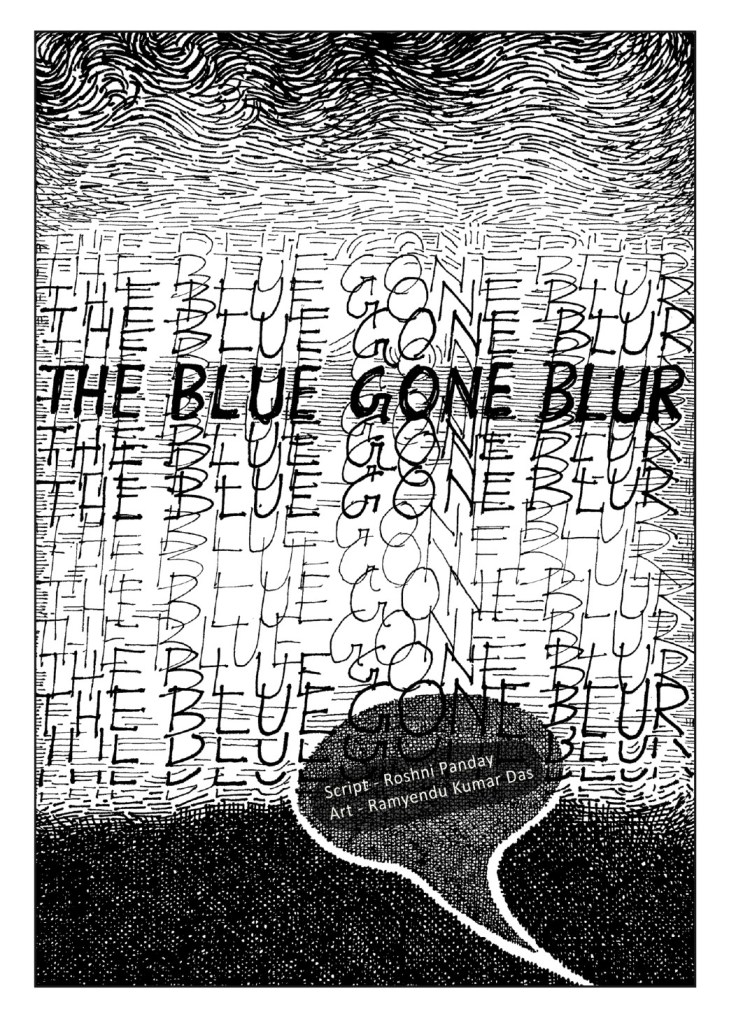
Pages from Psychera-II
Perhaps the project that truly brought home the challenges of the medium was ধ্রুবতারা (Dhrubo tara, The Pole Star). It all started with Roshni attempting to write a story inspired by the people and their experiences she came across during her study. The premise was a teenage friendship rudely cut short by drug abuse, a much overlooked problem that ails Tripura. Understandably, it wasn’t an easy task to compress the story, its emotions, and message into a comic format that relied on dialogues. Finally, after extensive field work across mental asylums and rehab centres, and some creative differences, Dhrubo Tara was born. While it immediately struck a chord, it became apparent that it was ruffling a few feathers. Although there was no direct attempt to censor it, the creators got curious questions and near-laments from even those in the artistic fraternity who believed it was too sensitive a topic for them to be dealing with. Ideally, a Dhrubo Tara should draw state support for spreading the awareness that it does, but alas! “What is the use then of inaugurating a 200 crore rehab centre?” Partha wonders.

The Comic Book Awakening
So what’s it like running an independent comic collective in Tripura? Partha and Roshni both agree that it is equal parts challenge and adventure. The concept of an independent publication was near zero, especially when it came to zines. While mainstream comics were familiar, Cross Cat’s raw, experimental approach to storytelling was something entirely new.
But over five years, they have noticed a shift in perceptions. What started as two individuals selling a 20 rupees comic, gradually evolved into a vibrant, collaborative community. Support trickled in—through crowdfunding, collaborations, and word-of-mouth enthusiasm. This ever curious and proficient duo have attracted a loyal and lasting support base.
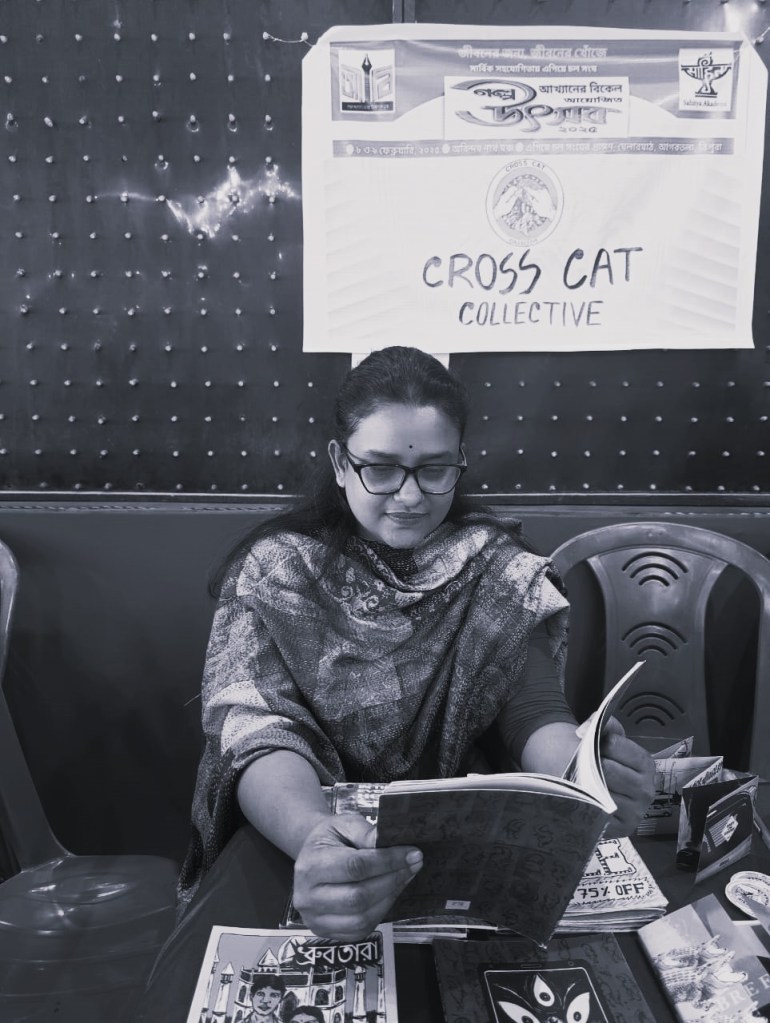
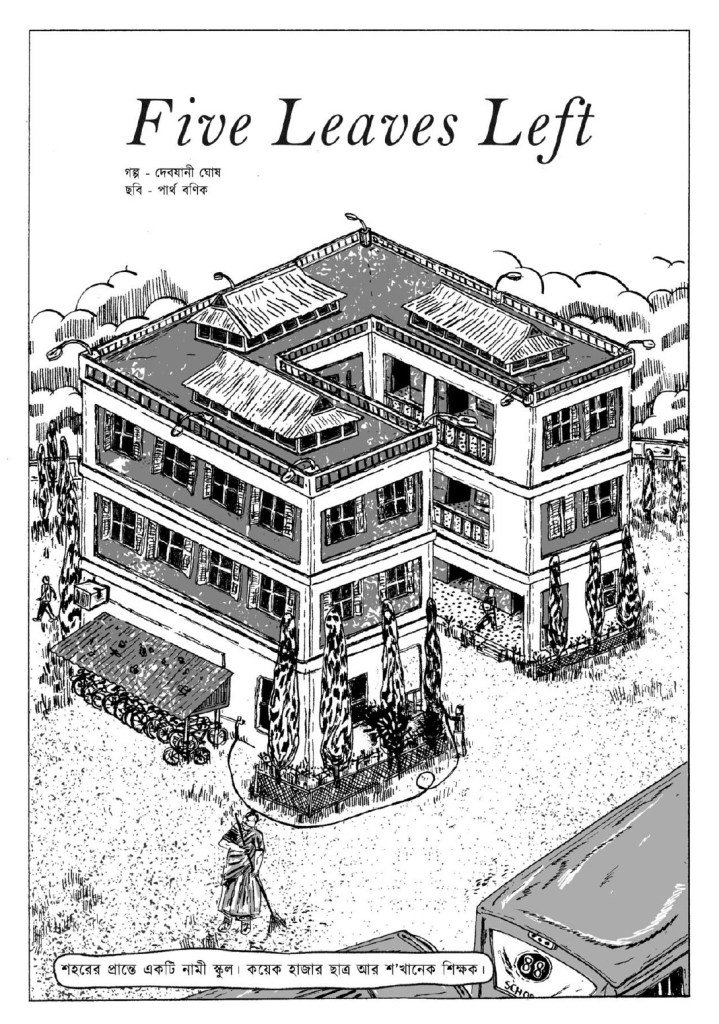
Devjani Ghosh, a guest faculty at the Bengali literature department in Tripura University, is another key figure at Cross Cat who initially joined as a supporter through her friendship with Partha. While not from the art world per se, she brings her expertise in literature and with an interest in magazines and publications. She was particularly impressed by how Cross Cat addressed social issues in a way that truly grabbed attention. The topics covered were local and deeply relevant, creating a unique space where art, social awareness, and literature intersect. She believes that this blend of diverse talents and backgrounds gives the platform its distinctive edge. Kids, in particular, have responded enthusiastically to the comics. For her, Cross Cat provided the perfect platform to voice the concerns that had been weighing on her. In Five Leaves Left, illustrated by Partho, Devjani recounts a particularly distressing episode from her time as a teacher. At her school, senior students were routinely tasked with searching the bags of their juniors, leaving the younger students feeling vulnerable and exposed. As personal belongings—gifts, cards, and even love letters—were confiscated, Devjani couldn’t help but reflect on the deeper implications of such an invasion of privacy, a concern often overlooked when it comes to children.


Another voice that was quickly drawn to Cross Cat’s world was Vijit. Back then a student at Tripura Govt. College of Art and Craft, he had stumbled upon Psychera-I in a senior’s room. He didn’t know Partha or Roshni then, but something about the comic felt rare and exciting—unlike anything he’d seen in Tripura. Soon, he was contributing to Cross Cat, rediscovering comics in a way he’d never imagined. Like many, he had grown up on Spider-Man and superheroes, but mainstream comics had faded from his life—until Cross Cat pulled him back in. Currently pursuing a degree in painting at the SN School of Arts and Communication, his experiences outside Tripura have only made him more aware of the lack of infrastructure and support for artists in his home state, forcing many to leave after art school. Perhaps that’s why he takes great pride in Cross Cat’s small but loyal audience who love the comics rooted in Tripura’s essence, from visuals to language.
The Hiccups among the Highs
Despite the fun and thrill of its growth, Cross Cat still battles major hurdles. The biggest challenge? Printing. Comics rely on crisp, striking visuals, but local printing facilities in Tripura have been a damper, often failing to do justice to their creative labour. Grainy textures, distorted lines, and poor-quality reproductions threaten to dilute their message and appeal.

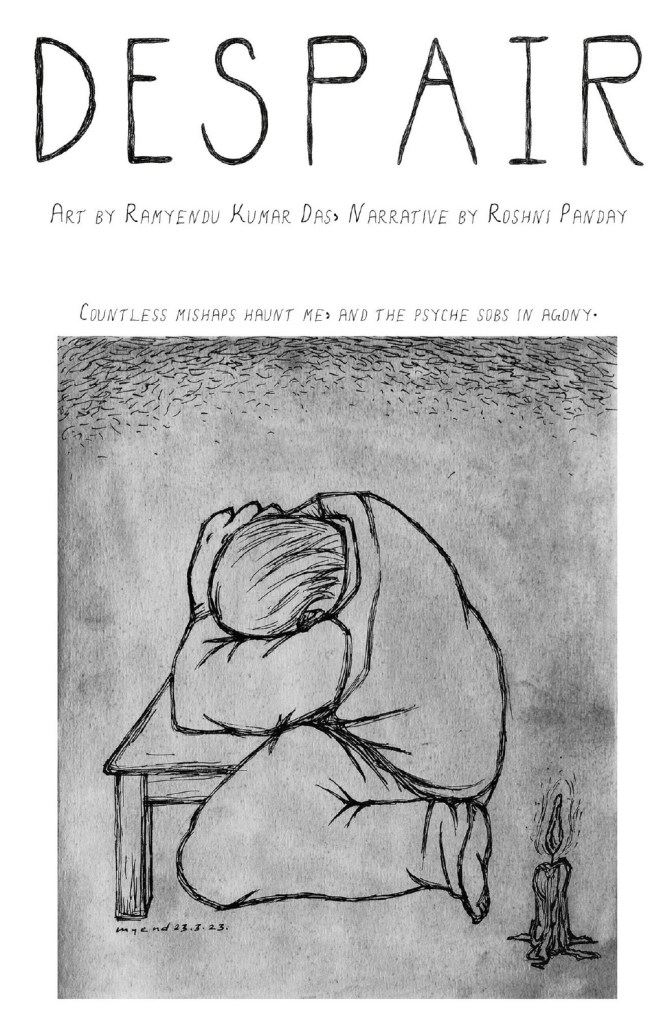
On top of that, funding remains a constant struggle. Without institutional support, securing financial backing—especially in Northeast India—is a grueling process. And without a permanent physical space, Cross Cat is confined to a backyard for now. “The financial barriers we face are not just logistical but also deeply systemic, reflecting broader inequities that marginalize our work and aspirations”, Partha and Roshni lament.
Yet Cross Cat carries an infectious energy. Art Spiegelman once said, “Comics are a gateway drug to literacy.” Cross Cat Collective believes they’re much more than that. Comics have a unique power to educate, challenge, and shift perspectives. They create awareness in ways that mainstream media often fails to do—turning complex socio-political issues into accessible, deeply resonant narratives.
They also come with a major advantage: affordability. Unlike other art forms that can be cost-prohibitive, comics and zines are relatively inexpensive to produce, making them a powerful tool for unearthing local stories and cultural preservation. One could think of Cross Cat not just as a medium, but also a movement.
The Road Ahead
What’s next for this indie powerhouse? They are currently collaborating with the Boinari Foundation, supported by the Art South Asia Project for an initiative that seeks to explore zines as an archival tool, preserving stories that might otherwise fade into obscurity.
Tripura might not be the easiest place to run an indie comic collective, but that’s exactly why Cross Cat exists. With each new zine, each new collaboration, and each new reader who stumbles into their world, they’re proving that radical, independent storytelling has a place—even in the most unexpected corners of the world. “Running an independent collective in Tripura is like an ant march—people will find their way to you if they catch the scent and flavour of comics once, so it was a task to introduce unfamiliar tastes to the people of Tripura”, they say.

 Ptenopus