
Jessica Jakoinao
In May 2022, Homegrown, a digital media publication that champions emerging voices in contemporary youth culture, spotlighted Gong Gangmei in their article featuring Indian street photographers using their unique lenses to artistically craft extraordinary images from ordinary, everyday scenes. Gangmei’s work was described as vividly capturing the essence of hip hop mania and streetwear culture in India, and his visuals as offering an immersive experience in a vibrant celebration of art, pop culture, and youthful energy pulsating through the streets. These words remain true, if not more pronounced, with every disruptive music video he adds to his name.
Gong’s latest collaboration on the music video titled “Terror” with Reble (Daiaphi Lamare), one of the country’s leading female rappers, and Ranchi-based music producer Tre Ess, seamlessly weaves Jaintia, Khasi, and English lyrics, blending Western and ancestral rhythms. The video has garnered significant praise from both viewers and critics alike.
“I love her music, and she’s pretty bold, especially since there aren’t many female rappers from our state or even India overall. Her flow and lyricism are exceptional. I think this music video is beautiful. I like the fact that there are different characters, and they added unique elements to each. I appreciate that both Khasi and Jaintia cultures were incorporated into this video,” says Nafisa Andrea Pathaw, a wildlife biologist of Khasi-Jaintia descent from Shillong. “Gong Gangmei is a genius. I haven’t seen this kind of concept or visuals before from an artist in town.”
“Our society is conservative, and it doesn’t quite fit into this environment here. But I think it has created a fan base,” remarks Daf, a local from Shillong. “This song is definitely a banger…the vocals are incredible…the emotions conveyed in this song are so raw and genuine. The cinematography is incredible; it really adds to the mood of the song. Love it,” says Ibateimon Kharkongor, a 24-year-old from Mawlai, Shillong. Basan from Smit, near Shillong, lauds the production quality, noting, “The music video was exceptional. The initial part reminded me of the movie Starship Troopers, with numerous guys wielding laser guns and effectively leveraging today’s CGI.”
As a multidisciplinary artist and videographer based out of Delhi, Gong Gangmei stands out for his ability to merge various cultural elements with futuristic visions, creating visually stunning narratives. In this interview, Gong shares insights into his creative process, inspirations, and the evolving landscape of filmmaking.
Q: How do you approach storytelling in your work, regardless of the medium or subject matter?
Gong Gangmei: I approach storytelling from a visual standpoint, aiming to evoke specific emotions or pose thought-provoking questions that allow audiences to interpret and engage with their own imagination. By creating visual narratives, I seek to spark varied perspectives and emotional responses among viewers.
Q: What is your favourite type of project to work on and why?
Gangmei: Currently, it would be hip hop music videos. I have a passion for hip hop, and I find it creatively stimulating to challenge myself to create unique visuals that stand out from the typical, popular music videos in the genre.
Q: Can you tell me about where you were brought up and some of the places you have lived in, and how have these different environments impacted your work and creative perspective?
Gangmei: I was brought up in Manipur, where my time in a residential school introduced me to the fundamentals of poetry and short story writing. This early exposure laid the foundation for my interest in fictional storytelling and imagination. Later, I moved to Delhi, where I discovered a passion for street photography. This hobby evolved into a self-taught journey into video making. Immersed in the subculture communities of sneakers, streetwear, and hip hop, I was inspired by the rich stories and culture, leading me to document them through my own lens. Additionally, I was surrounded by close friends who were product designers. Their influence introduced me to design thinking and various design philosophies. The culmination of these diverse experiences has significantly shaped my creative perspective, allowing me to use filmmaking and visuals to express my imagination effectively.
Q: How do you see the future of filmmaking and videography evolving, both within and outside of the North-East, and how are you preparing for those changes?
Gangmei: With more people getting into videography and filmmaking, the standards for good visual storytelling have definitely evolved both in the Northeast and across the country. However, the challenge of limited resources continues to constrain creators in the Northeast from producing content on a larger scale. Recent innovations in tools, such as AI-incorporated video making programs and AI image generation, offer a promising solution. These advancements enable creators to achieve higher production value with fewer resources. By leveraging AI as an assistant, I believe we can overcome some of these limitations and continue to push the boundaries of visual storytelling.
Q: How do you balance the artistic vision of the music artist with your own creative direction as a filmmaker?
Gangmei: Communication is key in every collaboration. Understanding the music artist’s vision and intentions for a particular track is crucial. Once that direction is established, I seek maximum creative freedom to interpret and enhance their vision. Typically, I work independently on the technical aspects throughout pre-production, production, and post-production. This balance allows me to align with the artist’s goals while bringing my unique creative direction.


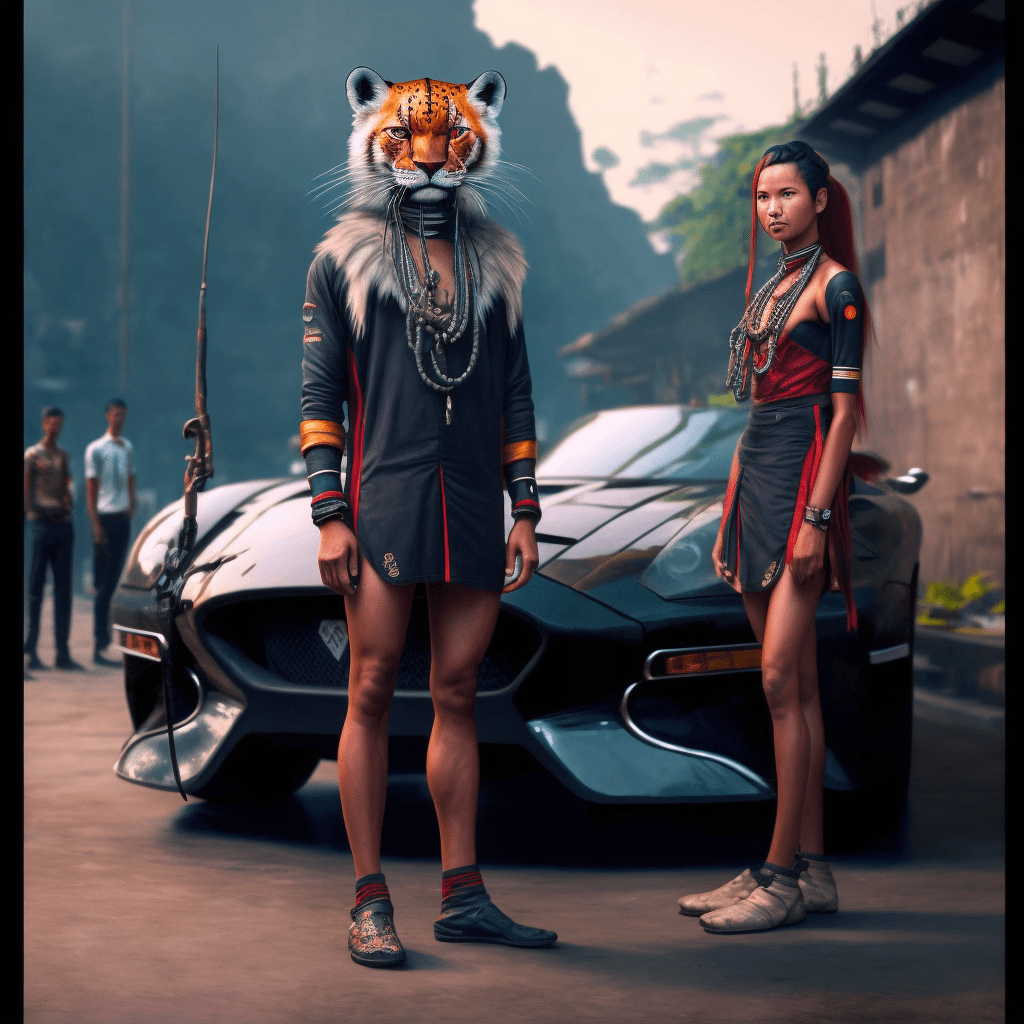

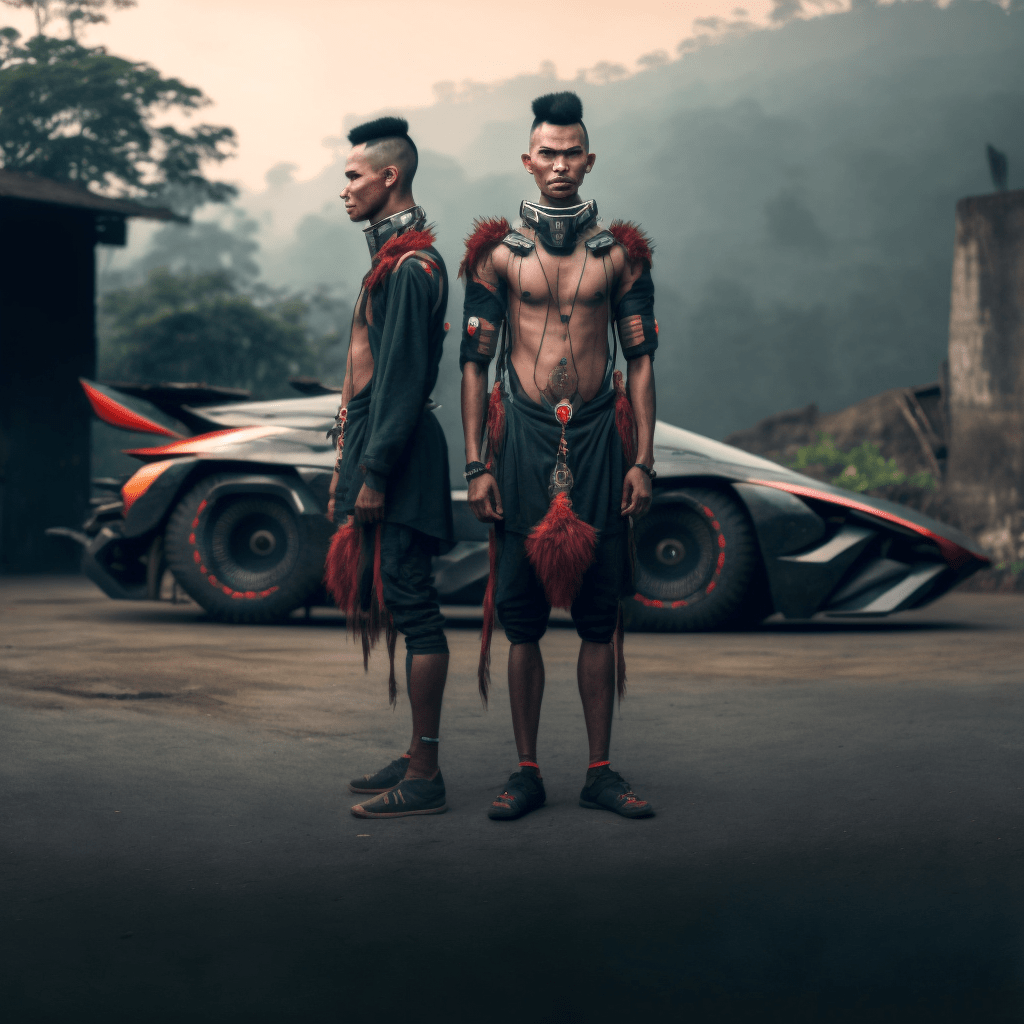


Q: What inspired you to combine Midjourney for your futuristic scenarios and costumes with tribal communities of Northeast India?
Gangmei: It began as an experiment to explore how originality can be manipulated to create alternative possibilities. Combining the indigenous tribal aesthetics of Northeast India with a futuristic reality and a fictional automotive racing championship storyline felt intriguing. This blend allowed me to reimagine these traditional elements within a new and captivating context.
Q: How do you ensure that your representations of cultures remain respectful and authentic while using AI technology?
Gangmei: My intention in using AI to create visuals that incorporate cultural aesthetics is not focused on cultural accuracy, but rather on exploring fictional alternative possibilities in different realities. AI image generation relies on prompts and references, and it cannot accurately represent the specific details of a tribe or cultural community. Therefore, I use AI as a tool for creative exploration rather than as a means to authentically depict cultural elements.
Q: How have the tribal communities responded to your futuristic interpretations of their cultures?
Gangmei: I think the tribal communities found it interesting to see how AI could interpret their cultural aesthetics in a futuristic context. Since the interpretations didn’t focus on the specific details of any particular tribe, they understood it was meant for creative exploration. Additionally, in a recent music video, I incorporated Jaintia and Khasi traditional attires with a futuristic blend, but without using AI. I ensured the cultural authenticity in this project, and it was well-received by the communities.
Q: What message or narrative are you trying to convey through your re-imagining of Imphal City as a cyberpunk metropolis? What tools did you use to create your animation?
Gangmei: Like many of my visual experiments, my re-imagining of Imphal City as a cyberpunk metropolis doesn’t have a specific narrative or message. Instead, I focus on the creative process and learning how to execute a particular visual experience. This project was something I wanted to see for myself, purely out of curiosity and experimentation. I used Blender and Unreal Engine to create these animations.
Q: What future projects do you have in mind that involve the intersection of AI, native tribal cultures, and futuristic art?
Gangmei: The blend of technology, innovation, and tribal representation has always been one of my favorite genres in audiovisual art. In my upcoming projects, I’m hopeful to incorporate these elements if they fit the project’s context. However, I don’t have specific projects in mind at the moment that focus solely on this intersection.
Gong Gangmei’s journey from Manipur to Delhi and beyond has been marked by a blend of cultural influences and technological advancements. His works possess a knack for powerful visual storytelling, bridging the gap between tradition and future possibilities, and offering a fresh perspective on the convergence of cultures and technology. Through his unique lens, he is among the few but growing talents who continue to push the boundaries of the music video scene in the North-East, as well as India. And with upcoming projects involving a variety of artists and Indian record labels, Gong is set to further elevate his impact on the industry.
 Ptenopus