
Art, Aspiration and Angst in Middle Cinema
Sumaiya Mustafa

Having grown up in a small town, my exposure to the world outside has been very limited. Reading textbooks outside of the syllabi was neither encouraged nor discouraged in the setting where I was raised. Inadequate reading had kept me from the joy of knowing—knowing and seeing the multitudes of this world. I was already a mother when I first came to know that the house I live in is called Art Deco by architects and academics. Close to three decades of my life, I have been living in the ancestral house built in an Art Deco style in a coastal town called Kayalpatnam in southern Tamil Nadu. The house was built in 1954, when it was in vogue in small-town India to have houses with curvilinear façades and terrazzo-floored interiors that otherwise could be seen in presidency cities like Bombay, facing the whitecaps of the Arabian Sea in Marine lines. My great grandfather who built the house, to borrow from Gyan Prakash’s Mumbai Fables where he writes about his father’s Art Deco house in Hazaribagh, “was not immune to the magnetism of Bombay”—courtesy his many business trips to the city in the 1940s.
As a naïve child, leaning on the low-lying parapet, on the terrace of my ancestral house—its façade being the streamliner—I have fancied the visuals of other Art Deco houses that stand pasted to the sky in the neighbourhoods around. My favourite Deco houses were those that stood with kitschy majesty, with cup-and-saucer or water-pot shaped overhead tanks. Over time, the families that lived in those houses battered down those structures to bring in other ugly structures. But while I declare them ugly, I am wondering if that is how Deco buildings as newborns were seen ugly by ‘heritage’ practitioners from that now-also-dead-era.
Tanya George, a type designer and walk curator based in Bombay, in an interview with Art Deco Mumbai, an initiative aimed at documenting and conserving Art Deco structures in the city, said that her walks, among other things, enable participants to see through the reasons behind the design choices of types and letterings of business establishments without judgement on taste.

But architectural gestures are simply expressions of performativity. The homeowners who commissioned those Deco structures wanted theirs to be known as the neighbourhood’s pièce de résistance. In small towns, and cities, among the small-time rich, Deco became a vehicle in an ongoing competition to outdo the other. The posterity like us is thus presented with vain structural gestures of cup-and-saucers, water-pots, aeroplanes, and streamliners. Moreover, an exhaustive amount has been written on Deco’s role in acting as a tool for nationalist, home-grown, and modern-day aspirations of the early 20th century India.
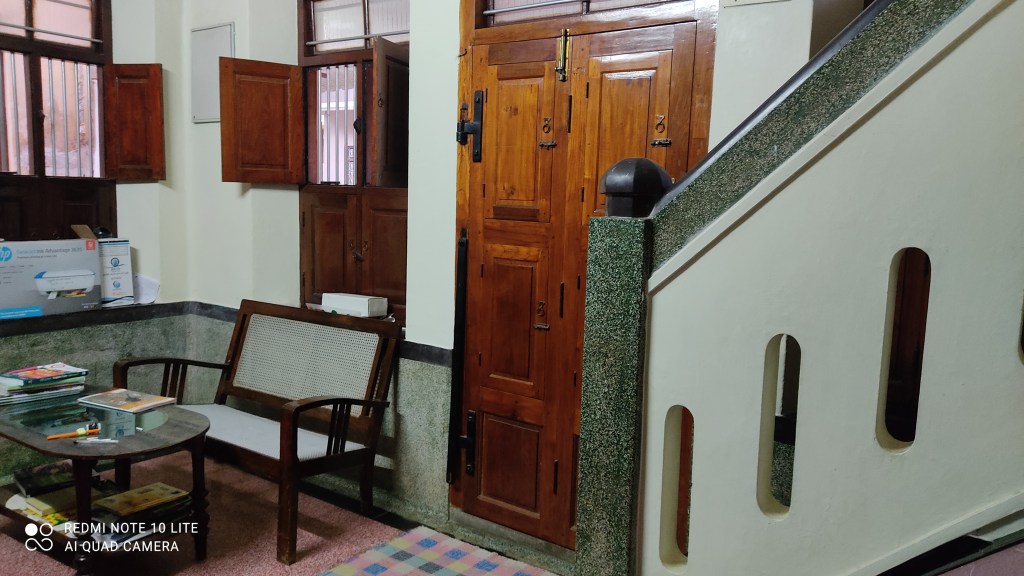

But, for a millennial like me, Deco is bygone. Not a relic but an active artifact to yesteryear’s modernity, experienced through its concrete curves, and corners. Especially as someone whose childhood house is a Deco, I immediately experience moments of familiar domesticity when seeing or stepping onto a terrazzo-floored curvy-cornered house or office. It acts as a synesthesia. I have experienced synesthesia as an abstract feeling without knowing the word while watching certain movies. Mainstream commercial cinema barely echoes one’s individual and complex experiences, but parallel cinema or middle cinema is a bag of treats in that regard. My experience of synesthesia, I would later discover, is courtesy Art Deco visuals in the many middle-cinema movies I had watched.
Undeniably, it is Basu Chatterjee who captured Bombay’s magnetism in his visuals. There was a time when garish popular cinema was preoccupied with a binary understanding of urban spaces—larger-than-life bungalows against aesthetics of garbage, that of cramped neighbourhoods and shanties. Basu Chatterjee and Hrishikesh Mukherjee’s movie frames can today be declared as visual archives of spaces we have lost to the abyss of time.
It is the recurring Deco details that give their frames a timeless modernity, which fortunately happens to be the element my eyes recognise as home, a relationship almost umbilical. To the many oldsters today, these movies are a window to the Bombay of yore when Deco was in its heyday, when Deco was state-of-the-art and once held the nation in a fascinating stupor.
Chhoti Si Baat (1976)
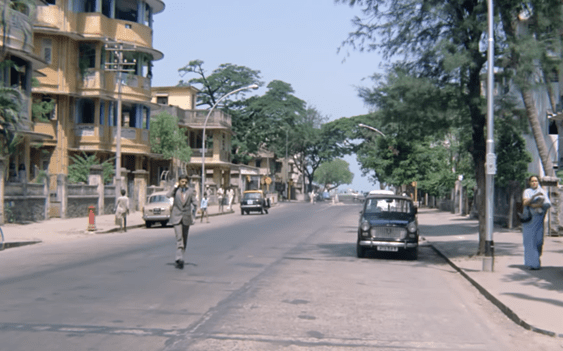
This is my most favourite of Basu Chatterjee’s movies, a movie that celebrates the love of two office-goers in Bombay where Arun (played by Amol Palekar), the hero, struggles with his repertoire of insecurities which keeps him from breaking his feelings to Prabha (played by Vidya Sinha), the heroine. There is another love story which the film keeps translucent—Bombay’s affinity for Art Deco. Take for instance, the neighbourhood right behind Marine Lines facing the sea with low-lying compound walls, as if to exhibit a wilful modesty. It rightly creates an inexplicable experience of modernity back then.

Even after five decades of its making, the freshness of the frames is timeless. It is spot-on for a Bombay-Deco confluence to visually and aurally experience on-screen; nothing short of a free heritage walk. Most of the movie is shot in South Bombay, Marine Lines in particular, which houses the largest number of Deco structures in the city, according to Art Deco Mumbai. The movie is an archive of an intangible Bombay dream that was. It was an era that first saw women office-goers in the locals and BEST buses, and office-romances that bubbled or fizzled at a bus stop. In this movie, Arun and Prabha can be seen doing perfect Bombay things like eating at Café Samovar in Jehangir Art Gallery and Gaylord restaurant at Churchgate. For a modern-day love story of the 1970s, Deco has played a great prop to paint modernity and urbanity in the movie.

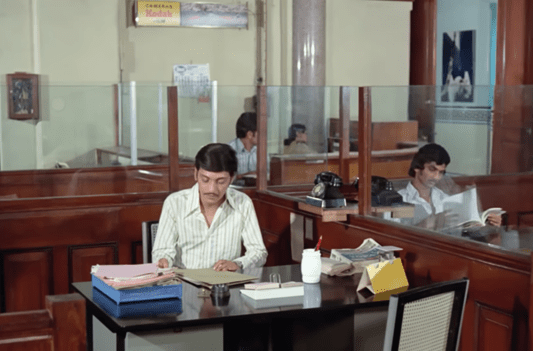
Though Arun’s office is Indo-Saracenic, the telephone, typewriters, cubicles are all Deco, implicitly giving you a sense of old-world solemnity alongside the modern. Deco is, throughout the movie, an innate limb of the city.

Gharaonda (1977)
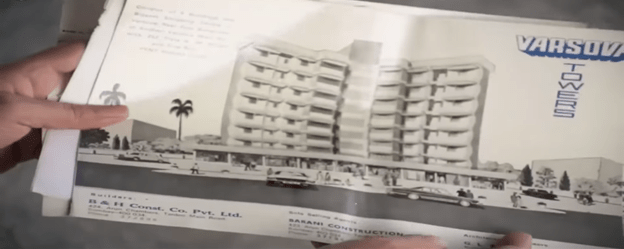
If Chhoti Si Baat leaves you with a sweet Bombay hangover, Bhim Sain’s Gharaonda is a just portrayal of the city’s space crisis and its corollary concerns. Sudeep (played by Amol Palekar) and Chhaya (played by Zareena Wahab) are colleagues-turned-sweethearts who land in a tragic loss of both money and love in their mission to find a space of their own in Bombay. Deco is at the heart of the story’s unfortunate flip. As an unmarried couple, they lurch around the city’s public spots from cinema theatres to beaches to bus rides, and restaurants. The question of marriage tows with itself the question of space, a better space, dignified, and thus Deco, unlike their present lives in the chawls.

In a scene, Sudeep and Chhaya, at Bandra fort (image above), sit with brochures of the front view plan of Deco apartments, envisioning their potential future in a tiny corner of those grand plans. Deco here is aspirational. But the infamous builder scams, among many other things the city is known for, befalls them and they lose their hard-earned money. Dejected by Deco dreams, Sudeep’s frustration and disorientation breaks their relationship.
Baton Baton Mein (1979)
Basu Chatterjee’s love for Bombay did not end with his characteristic frames of the city. His idea of the city transcends built structures and spaces. Though Deco and Bombay are permanent fixtures, this movie is an ode to the East Indians of the city, native to the Seven Islands of Bombay, before it took its present shape. If you are finding the last sentence absurd for calling Bombay’s original inhabitants as East Indians, when it is boisterously seated on India’s west, then this trivia is for you: many groups of Bombay’s early Catholics who were affiliated with the Portuguese—some claim a partial descent—rechristened their community’s name as East Indians to express their gratitude to the British East India Company on the occasion of the 50th birth anniversary of Queen Victoria II. Most of them served the crown in various administrative positions.

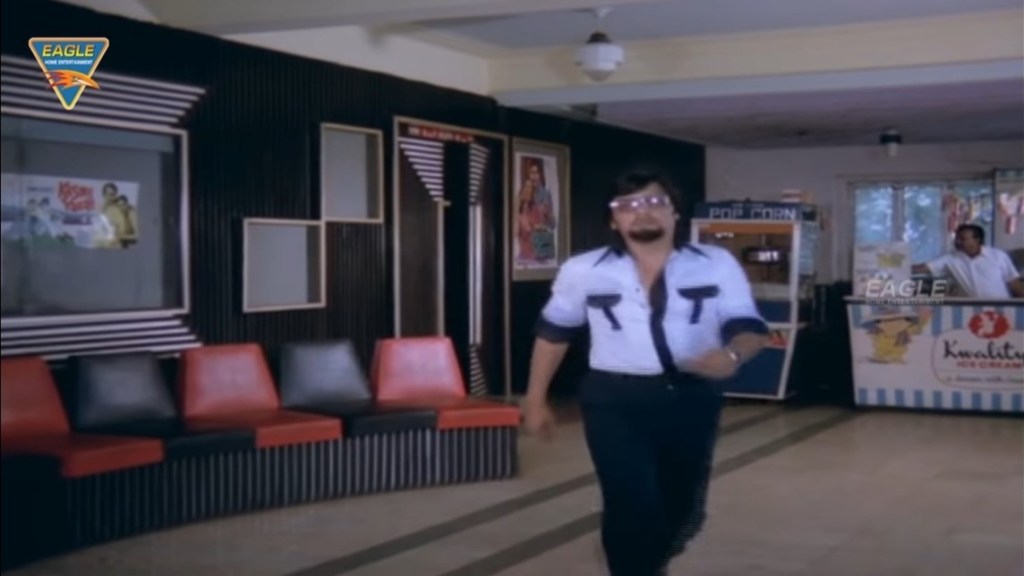

As the movie is set in the Catholic villages of Bandra, which survived many mutations that the city’s circumstances put it through, Deco is far and few in the movie. The old styled bungalows with Mangalore tiled walls, attics, and rosewood furniture create meanings for the film’s framework. But certain elements like an Art Deco styled couch inside a Portuguese-styled bungalow and the Deco dining table, which is a common site for heated debates on marriage, function as symbols of changing times. The iconic “Baton Baton Mein” song and the many scenes where the protagonists meet in seclusion have in its backdrop Deco towers pasted to the city’s skyline. Long shots or medium long shots with Deco structures are a visual metonym of the city of Bombay itself. Passionate couples by the shoreline and a Deco decked skyline is a visual that will never get old.

Apoorva Raagangal (1975)
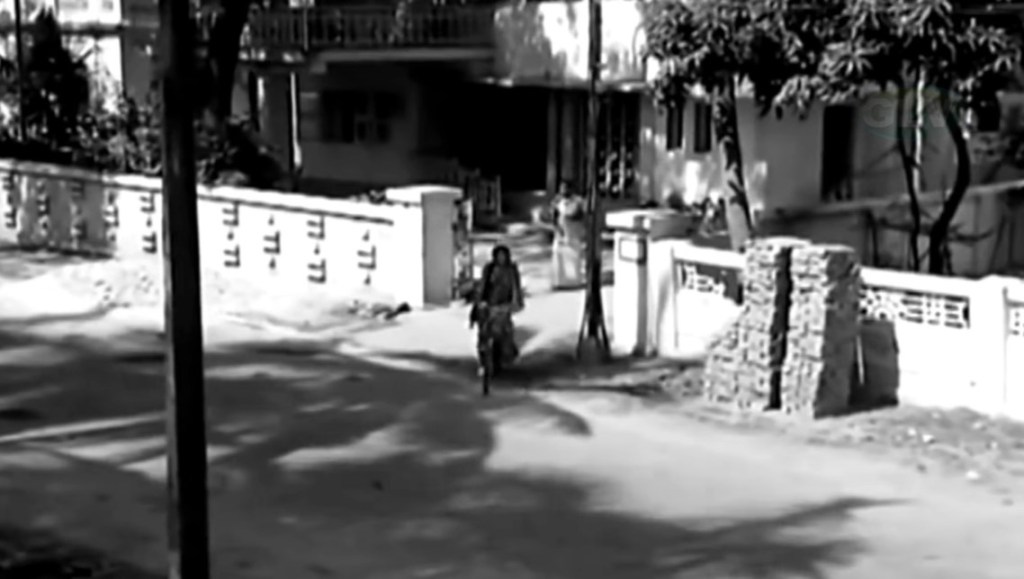
This 1975 Tamil movie which can be translated to ‘rare ragas’ is directed by K Balachander, popularly known as K B. In 1975, two decades after the advent of colour movies, K B continued his fixation with black-and-white frames for his movies including this one. Even today the frames of the movie continue to fascinate me—certainly for its Deco. Most of the movie is shot in two grand independent Deco houses reflecting the stout wealth of the two elderly characters in the movie. In black-and-white frames, the two beautiful Deco houses with their prominent Deco elements create a visual experience of Madras’ spatial and sensorial themes with a rooted cosmopolitanism.

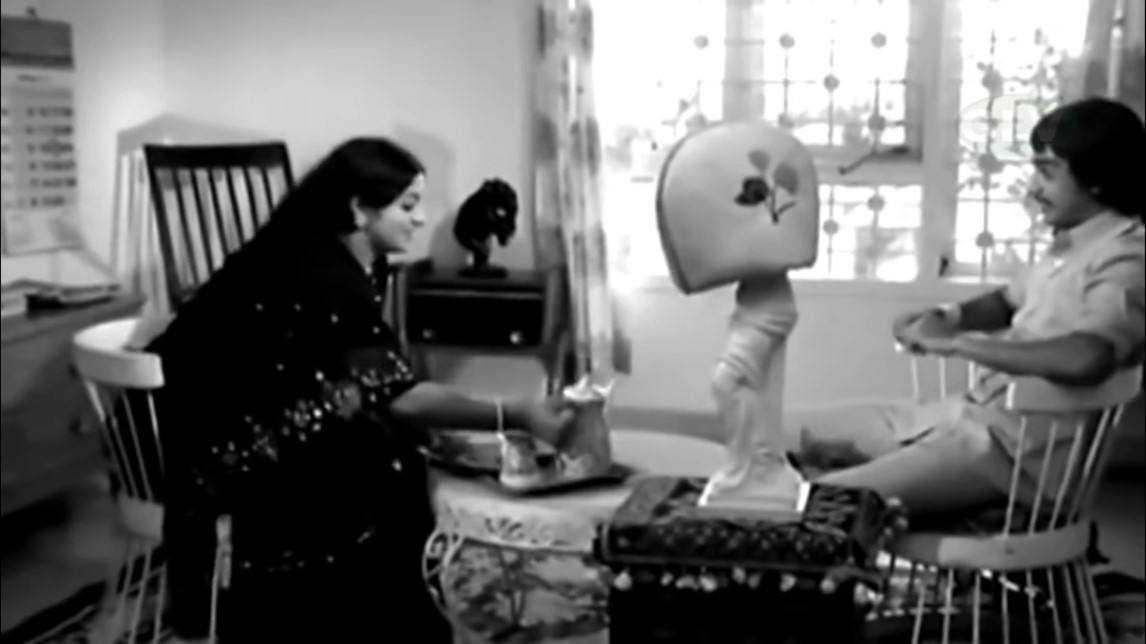
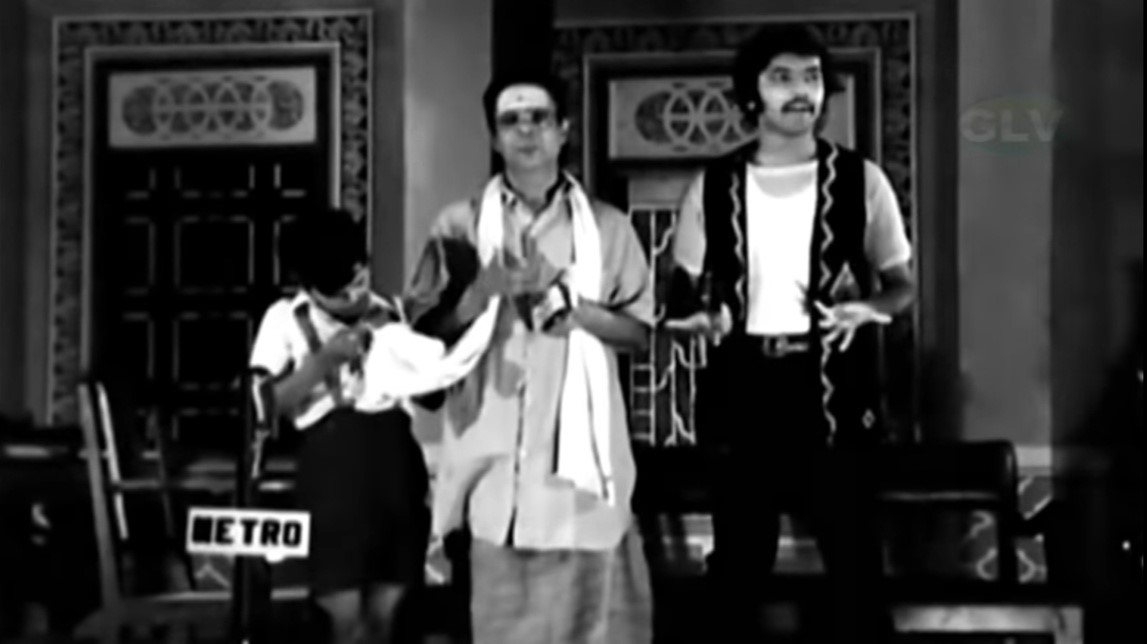
I cannot evade the topic of elitist upper middle-class urban aesthetics of K B’s movies, and the ‘innocence’ of his vegetarian dieted characters which, in my opinion, have generously contributed to the popular caricatured imagination outside Tamil Nadu—that all Tamils are coffee-drinking pure vegetarians. Deco owners in real-life Madras belonged to reserved neighbourhoods and were mostly upper-caste drama company owners or Tamil cinema bigwigs. In Chennai, even today, as one walks around the old neighbourhoods of West Mambalam, Mylapore and Triplicane, which are known for their strong Tamil Brahmin population, one would find old Deco houses ostentatiously half-covered by huge flowering trees elevating the space’s look from ordinary to lordly. Asmitha Athreya, head of operations of a heritage venture called Madras Inherited, makes a crisp observation of early Deco owners being wealthy. Over time, Deco fever trickled down to the middle class.
This leads to another personal realization that, unlike Mumbai, Chennai’s Deco houses were mostly independent residences, often called bungalows. Apoorva Raagangal’s Deco house owners are said to be the relatives of one of the moguls of Tamil cinema industry, A V Meyyappan, of the most famous AVM Production. All throughout the movie, the towering presence of Deco clearly shows us the who’s who of the city.

Thillu Mullu (1981)
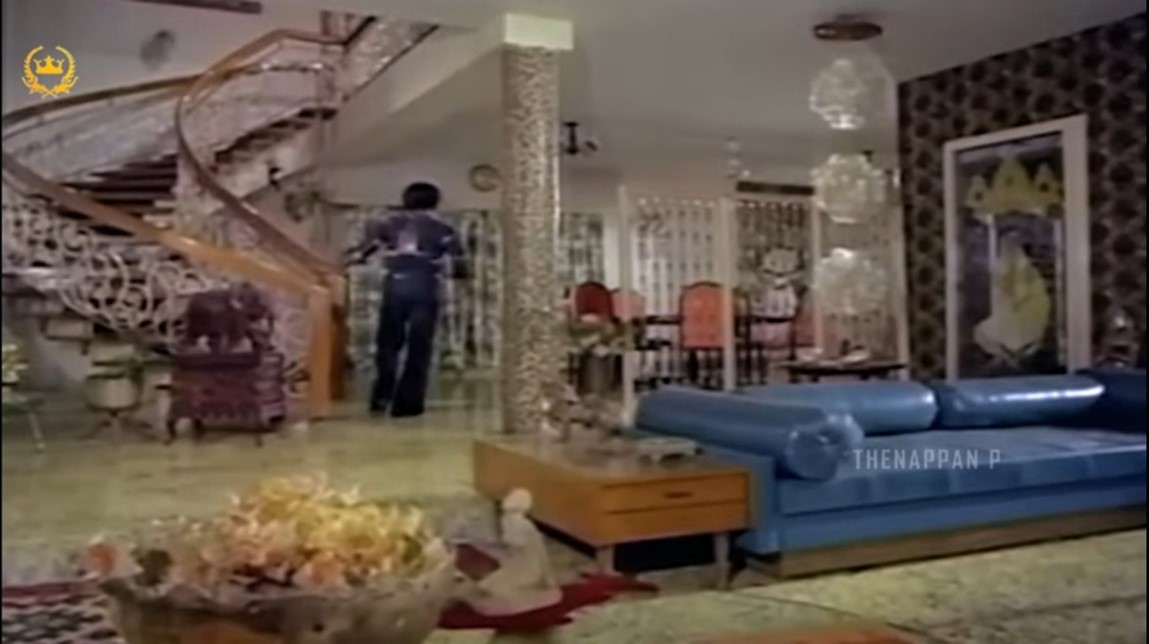

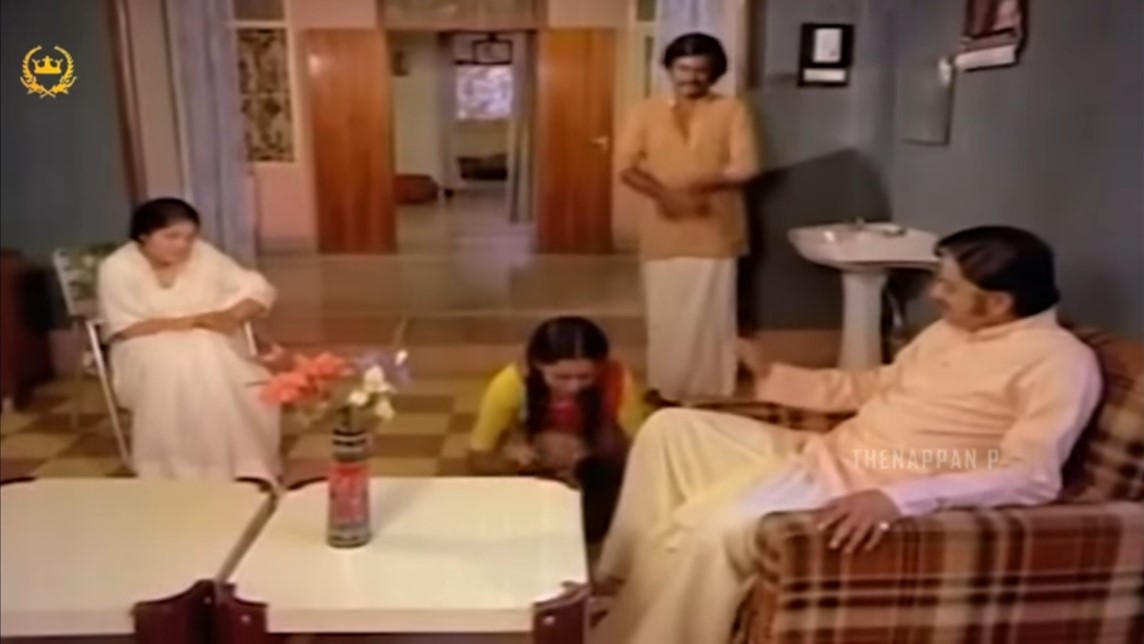
Thillu Mullu brings me memories of the late 1990s and early 2000s when I was home on holidays getting to experience a slice of television afternoons. The visuals of the movie transport me into Deco spaces that I have best known all my life. What I like most in the movie’s visuals is the astute utilization of Deco spaces, to create an impression of largeness. Chandran’s flat, which is the first storey of a moderately large independent house, is Deco and so is his boss’ bungalow which is made to look like a futuristic space—adorned with wallpapers and shot at wide angles.
In a frame, when Chandran’s uncle explains to him the ways to win his boss’ heart, behind Chandran is a Tutankhamun piece. Tutankhamun and Deco are born twins. The discovery of the Pharaoh’s tomb coincided with the era of Deco’s initial days. And the world, from West to East, went on a spree to have the Pharaoh’s icon on façades, as wall hangings, motifs on entrances, and elsewhere. In another frame, we see a window grill with jaali work of Goddess Saraswathi. Native symbols, and icons are characteristics of Deco structures in India. Especially window grills like that in Madras at that time was a straightforward expression of everyday religiosity.

Some of the most interesting visuals are those heralding the comeback of vernacular iconographic expressions and symbols which were found only in millennia old temples. Moreover, the Madras Art Movement was active in creating and marketing a visual culture that was local with a home-grown philosophy. In Madras, the movement was successful in creating a new kind of aesthetics that fused nationalism, sub-nationalism, classical projects in performance arts, and a new breed of connoisseurs, tied together by conforming to an emerging category of aesthetics for an urban middle class. Be it the occasional focus of frames on the Thanjavur dolls—a head spinning doll made in Thanjavur by traditional artisans—or the presence of nationalist leaders on the office walls in the movie, the new nation state’s newly found common symbols merged comfortably with Deco spaces.
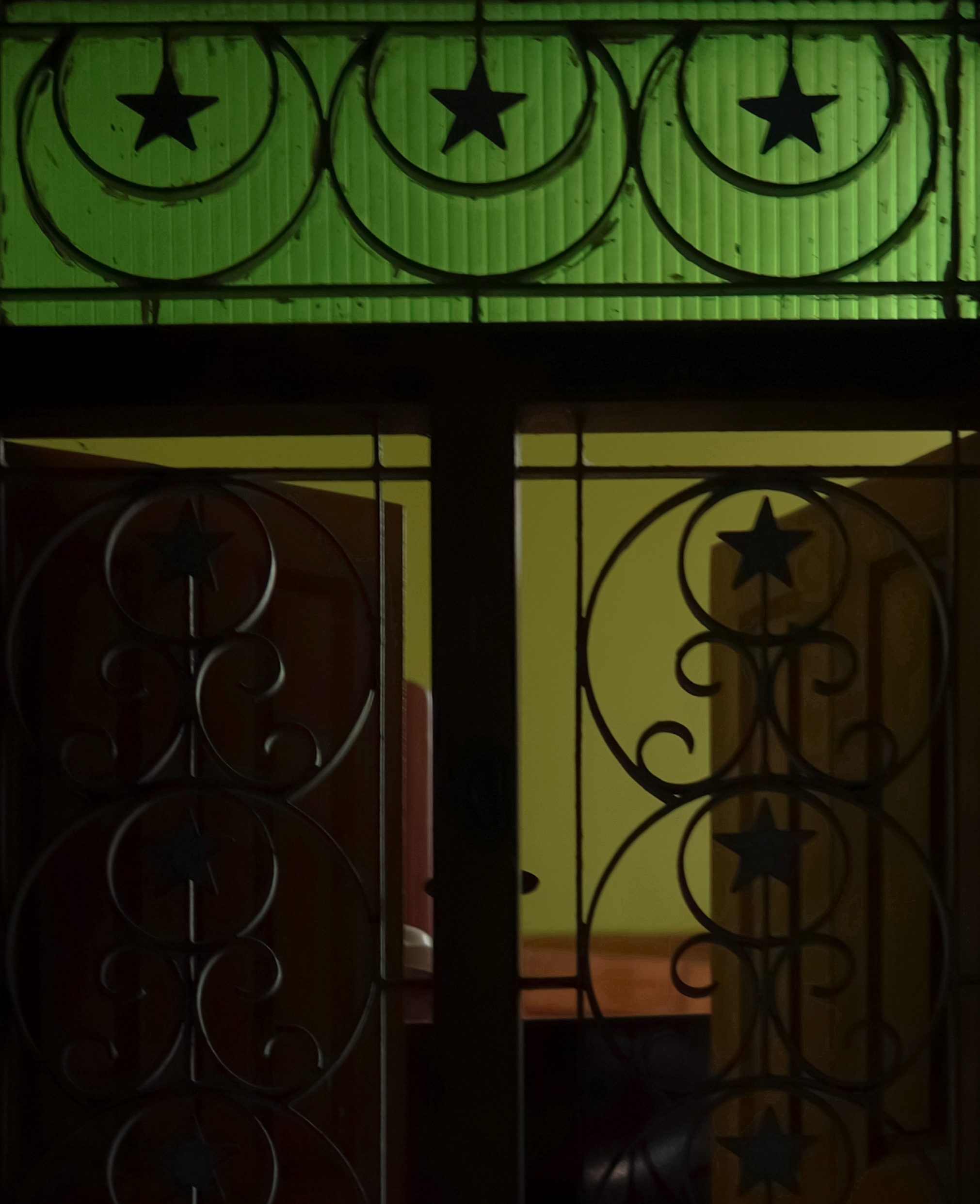
Art Deco, which began as a movement in France, became a tool to display anti-colonial and pro-nationalist sentiments in India—making a marked shift in the streetscape of cities like Bombay. In cinema, it was used by creators to signal a motley of expressions that were often contradictory to one another. It is interesting how Deco spaces have been deployed to aid and create a wide gamut of visual expressions and storytelling. On a languid afternoon when there is little else to do, one can watch movies like these and soak in the memories of life that once was.
Sumaiya Mustafa is a writer of cultures, culinary practices, and stories that intrigue her. She has written for various publications, and is currently doing her research on littoral culinary practices and tastes as identity markers.
 Ptenopus